







You're watching your favorite ASMR video.
The soft whispers. The gentle tapping. The crisp sounds of brushing, scratching, crinkling. You feel that tingling sensation starting at your scalp, spreading down your spine.
Then you try to record your own ASMR video with your laptop mic.
It sounds terrible.
The whispers are muffled. The tapping sounds distant. The delicate mouth sounds that should trigger tingles sound like you're recording from inside a cardboard box. Your phone mic isn't much better.
Here's the truth: ASMR requires specialized microphones.
The soft sounds, subtle textures, and 3D spatial audio that make ASMR work can't be captured by standard microphones. You need equipment designed specifically to record the quiet, nuanced sounds that trigger autonomous sensory meridian response.
This guide will help you find the perfect ASMR microphone for your needs and budget.
Whether you're starting your first ASMR YouTube channel, upgrading your existing setup, or just want to record better tingles for personal use, we'll cover everything you need to know about ASMR microphones.
From binaural recording to XLR vs. USB, from $100 budget options to $1,500 professional setups, we've got you covered.
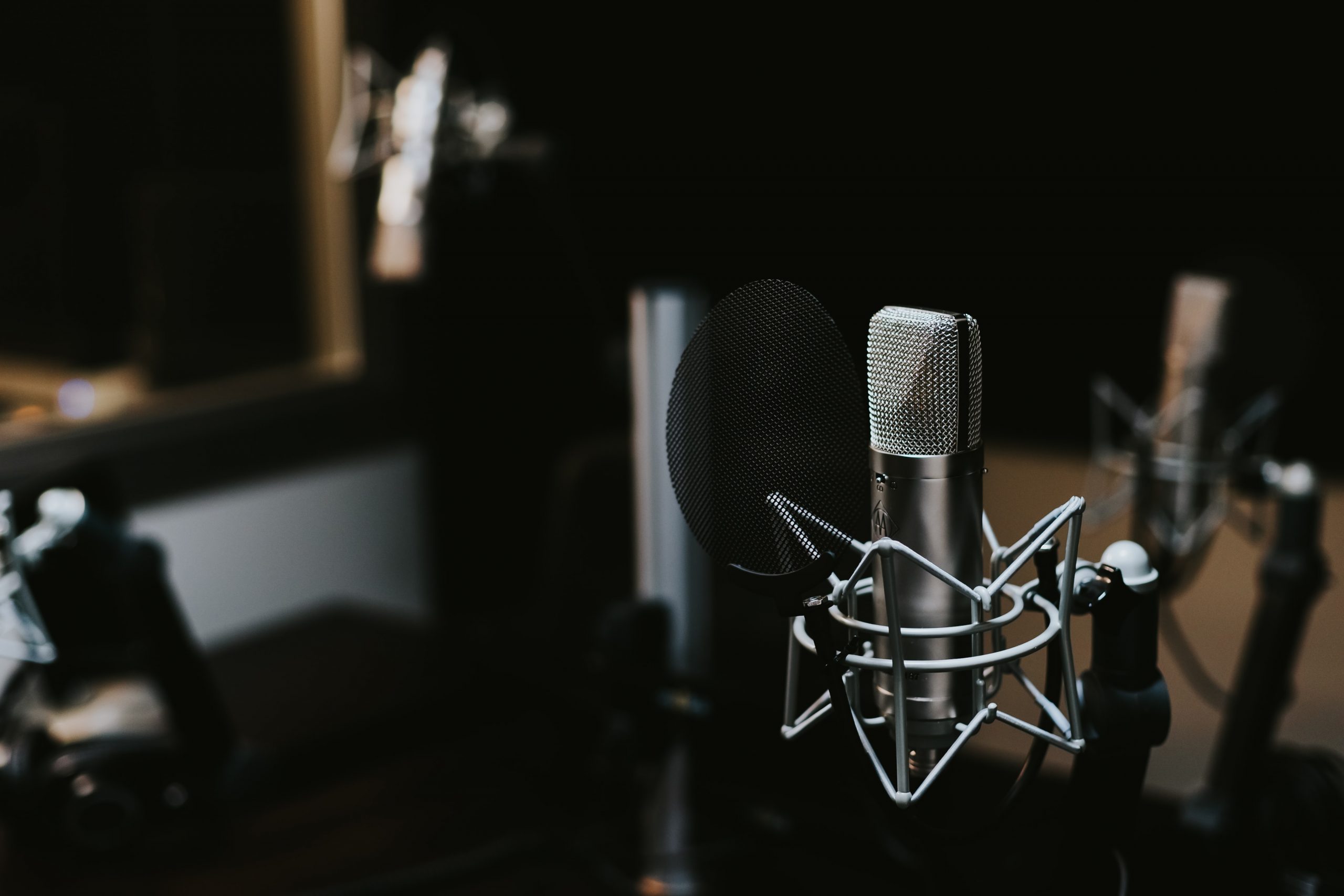
ASMR stands for Autonomous Sensory Meridian Response.
It's a tingling sensation that typically begins at the scalp and moves down the back of the neck and spine. Some people describe it as a “brain massage” or “brain tingles.”
Common ASMR triggers:
- Whispering or soft speaking
- Tapping sounds (nails on hard surfaces)
- Scratching sounds (on fabric, cardboard, textured surfaces)
- Crinkling (paper, plastic, foil)
- Page turning
- Brushing sounds (hair brushing, makeup brushes)
- Mouth sounds (lip smacking, eating quietly)
- Personal attention roleplay (spa, haircut, medical exam scenarios)
- Ambient sounds (rain, keyboard typing, writing)
Why people watch/listen to ASMR:
- Relaxation and stress relief
- Help falling asleep (insomnia relief)
- Anxiety reduction
- Meditation and mindfulness
- Companionship and comfort
- Pure enjoyment of the sensory experience
The ASMR community is massive:
- Millions of ASMR videos on YouTube
- Dedicated ASMR channels with millions of subscribers
- ASMR playlists on Spotify and other streaming platforms
- Growing research into ASMR's psychological and physiological effects
And creating high-quality ASMR content requires the right equipment.
Why You Need a Special ASMR Microphone
Can't you just use your phone or laptop mic?
Technically yes, but the results will be disappointing. Here's why ASMR requires specialized microphones:
1. ASMR Sounds Are VERY Quiet
ASMR triggers are often whisper-quiet. Standard microphones are designed for normal speaking volume (around 60-70 dB). ASMR whispers can be as quiet as 20-30 dB.
What happens with regular mics:
- You have to turn the gain way up
- Background noise becomes overwhelming
- Hiss and static ruin the intimate atmosphere
- Subtle details get lost
What ASMR mics do:
- Extremely sensitive capsules capture quiet sounds
- Low self-noise (the mic itself is quiet)
- High signal-to-noise ratio
- Capture delicate details like breath sounds and fabric rustling
2. ASMR Requires 3D Spatial Audio
One of ASMR's most powerful elements is the feeling that sounds are happening around you, not just in front of you.
Binaural recording:
- Uses two microphones (left and right channels)
- Mimics human hearing
- Creates 3D soundscape when listened to with headphones
- Sounds can appear to move from left ear to right ear
- Creates intimate “presence” feeling
Standard mono/stereo recording:
- Single microphone or basic stereo pair
- Flat, one-dimensional sound
- Loses spatial information
- Feels distant and clinical
3. ASMR Demands High-Fidelity Audio
The tingles come from subtle sonic details:
- The texture of a makeup brush on a surface
- The specific crinkle of different papers
- The breath between whispered words
- The resonance of tapping on wood vs. plastic
Consumer-grade microphones:
- Compress and process audio automatically
- Lose subtle frequency information
- Add artificial noise reduction that removes texture
- Low-quality preamps add distortion
Professional ASMR microphones:
- Flat frequency response (accurate reproduction)
- Wide dynamic range (quiet to loud without distortion)
- High-quality preamps
- Minimal processing (pure sound)
4. ASMR Creators Need Flexible Recording Options
Different ASMR styles require different recording techniques:
- Close whispers (directional mic inches from mouth)
- Binaural triggers (sounds moving left to right)
- Ambient sounds (room atmosphere)
- Multiple simultaneous sounds (layered triggers)
Professional ASMR mics offer:
- Multiple pickup patterns (cardioid, omnidirectional, figure-8)
- Binaural recording capability
- High sensitivity for extreme quiet
- Low handling noise (won't pick up mic stand bumps)
Bottom line: If you're serious about creating ASMR content, you need a microphone designed for the task.
7 Best ASMR Microphones
Now that you know a little bit about ASMR and what an ASMR microphone is, it's time to find the best one for you. With so many different options on the market, it can be tough to know where to start. That's why we've put together a buyer's guide to the seven best ASMR microphones, complete with all the information you need to make an informed decision.
1. 3Dio Free Space Binaural Microphone – The Professional Standard

Type: Binaural XLR microphone
Best for: Professional ASMR creators, serious enthusiasts
Why it's the best for ASMR:
The 3Dio is THE microphone you see in every professional ASMR video. It's the industry standard for a reason: it creates the most realistic, immersive binaural experience available.
Key features:
- Realistic silicone ears – Designed to mimic human ear shape and texture, creating authentic spatial audio
- Two XLR outputs – Left and right channels provide professional-quality signal
- 48V phantom power – Professional standard for condenser microphones
- 300+ hour battery life – Built-in 9V battery for standalone use
- 3.5mm output option – Can connect to consumer devices or recorders
- Multiple mounting options – Standard mic stand adapter (5/8″), hot-shoe mount, or 1/4″-20 thread for tripods
What makes it special:
When someone taps on the left side of the 3Dio, listeners with headphones hear it exactly as if someone tapped their left ear. The spatial accuracy is uncanny and creates the intimate, immersive feeling that makes ASMR work.
Real-world performance:
- Captures whispers with stunning clarity
- Mouth sounds are crisp and detailed
- Tapping triggers feel like they're happening inches from your ears
- Ambient room tone is natural and present
Who should buy it:
This is a professional investment. If you're serious about ASMR content creation, planning to monetize your channel, or simply want the absolute best binaural experience, the 3Dio is worth every penny.
Who shouldn't buy it:
If you're just starting out, this is overkill. Get comfortable with ASMR recording first, then upgrade when you're ready to invest in professional gear.
Pros:
✅ Industry-standard binaural recording
✅ Unmatched 3D spatial audio
✅ Professional XLR outputs
✅ Long battery life
✅ Versatile mounting options
✅ Used by top ASMR creators worldwide
Cons:
❌ Expensive ($1,500)
❌ Requires audio interface for XLR version
❌ Large and somewhat delicate (silicone ears)
❌ Battery replacement can be tricky
Bottom line: If you can afford it, this is the ultimate ASMR microphone.
2. Shure SM7B – The Vocal Powerhouse
Type: Dynamic XLR microphone
Best for: Whisper ASMR, speaking ASMR, podcasting-style content
Why it's great for ASMR:
The SM7B is beloved by podcasters, musicians, and ASMR creators for its warm, smooth sound and excellent noise rejection. While not binaural, it excels at capturing intimate whispers and soft voices.
Key features:
- Smooth, flat frequency response – Natural, warm sound perfect for voice
- Built-in pop filter – Eliminates breathiness and plosives (P and B sounds)
- Advanced electromagnetic shielding – Blocks interference from computers and phones
- Excellent off-axis rejection – Minimizes room noise and background sounds
- 60dB+ gain requirement – Needs a powerful preamp or cloudlifter
What makes it special:
The SM7B has a legendary reputation for vocal recording. It's the mic Michael Jackson used for “Thriller.” It makes whispers sound incredibly smooth and intimate without being harsh or sibilant.
Real-world performance:
- Whispers sound warm and close without popping
- Minimal room noise pickup (great for imperfect recording spaces)
- Handles very quiet sounds with proper gain
- No harsh “s” sounds (sibilance) common in cheaper mics
Who should buy it:
Perfect for ASMR creators focusing on:
- Whisper videos
- Soft-speaking videos
- Roleplay scenarios with dialogue
- Less emphasis on binaural triggers, more on vocal quality
Who shouldn't buy it:
Not ideal if you want binaural recording or primarily do tapping/scratching trigger videos. It's also a dynamic mic, so it's less sensitive than condensers for extremely quiet sounds.
Important note: The SM7B is “gain-hungry,” meaning it needs a LOT of power. Budget for a Cloudlifter CL-1 (~$150) or a high-gain audio interface.
Pros:
✅ Professional broadcast-quality sound
✅ Exceptional noise rejection
✅ Built-in pop filter
✅ Warm, smooth vocal tone
✅ Works in less-than-ideal recording spaces
Cons:
❌ Requires high-gain preamp or cloudlifter
❌ Not binaural
❌ Heavy and large (not portable)
❌ Dynamic mic = less sensitive for very quiet sounds
Bottom line: The best non-binaural mic for whisper and speaking ASMR.
3. AKG Pro Audio C214 – The High-End Condenser
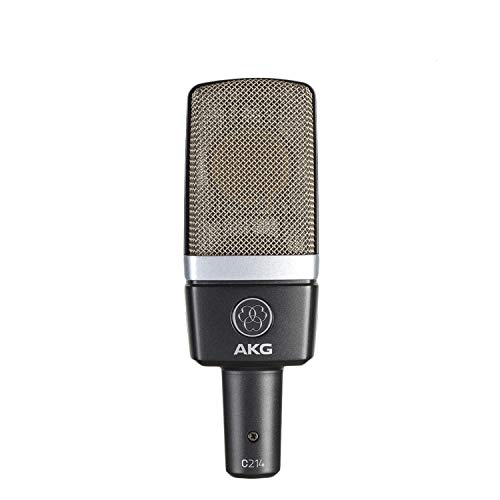
Type: Large-diaphragm condenser XLR microphone
Best for: Studio-quality ASMR recording, vocal ASMR, detailed sound capture
Why it's great for ASMR:
The C214 is a professional studio condenser that captures incredible detail and has an ultra-low noise floor—perfect for the quiet sounds of ASMR.
Key features:
- Outstanding dynamic range – Handles whisper-quiet to louder sounds without distortion
- Ultra-low noise floor – Minimal self-noise (microphone's own hiss)
- 20dB attenuator – Prevents distortion on louder sounds
- Bass-cut filter – Reduces low-frequency rumble and handling noise
- Integrated suspension – Built-in shock mount reduces vibration
- Rugged construction – Professional build quality with protective case
What makes it special:
The C214 is essentially a budget version of AKG's legendary C414, one of the most respected studio microphones in the world. It inherits the same capsule design and sonic character at half the price.
Real-world performance:
- Exceptional clarity on whispers
- Captures subtle textures (fabric rustling, paper sounds)
- Very low self-noise (won't introduce hiss)
- Beautiful, natural tone
- Great for both voice and trigger sounds
Who should buy it:
This is perfect for serious ASMR creators who want studio-quality sound but don't need binaural recording. If you're doing whisper videos, trigger compilations, or high-quality roleplay content, this delivers professional results.
Who shouldn't buy it:
If you specifically need binaural recording, look elsewhere. Also, at $400, this is a significant investment for beginners.
Pros:
✅ Professional studio-quality sound
✅ Ultra-low noise floor
✅ Exceptional detail capture
✅ Built-in shock mount
✅ Bass-cut filter and attenuator
✅ Includes protective case
Cons:
❌ Not binaural
❌ Requires audio interface and phantom power
❌ Higher price point
❌ Sensitive to room acoustics (needs treated space)
Bottom line: If you want the best possible sound quality for non-binaural ASMR, this is it.
4. Behringer C-1 Large-Diaphragm Condenser – The Budget Champion
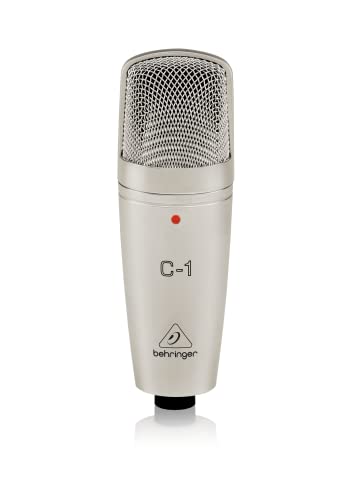
Type: Large-diaphragm condenser XLR microphone
Best for: Beginners, budget-conscious creators, learning ASMR recording
Why it's great for ASMR:
The Behringer C-1 is shockingly good for the price. It won't compete with $400 mics, but it's 10x better than your laptop mic and perfect for learning ASMR recording without breaking the bank.
Key features:
- Cardioid pickup pattern – Focuses on sounds in front, rejects background noise
- Transformerless FET input – Clean, accurate signal
- Phantom power required – Standard for condenser mics
- Included swivel mount – Basic but functional mounting
- Large diaphragm sensitivity – Good for quiet ASMR sounds
What makes it special:
For $50-70, this mic punches way above its weight class. Behringer is known for budget pro audio gear, and the C-1 delivers solid performance at an entry-level price.
Real-world performance:
- Captures whispers clearly (though not as detailed as expensive mics)
- Good sensitivity for quiet sounds
- Decent noise floor (some self-noise, but acceptable)
- Works well for basic trigger sounds
- Cardioid pattern helps reduce room noise
Who should buy it:
Perfect for:
- Complete beginners learning ASMR recording
- Creators on a tight budget
- People testing whether they enjoy making ASMR content
- Secondary mic for multi-mic setups
Who shouldn't buy it:
If you already know you're serious about ASMR and have the budget, skip this and get the Rode NT1-A or Audio-Technica AT2020 instead.
Important note: Some users report the C-1 can be overly sensitive, picking up computer fans and other background noise. Use in a quiet space and consider acoustic treatment.
Pros:
✅ Incredibly affordable ($50-70)
✅ Surprisingly good sound quality
✅ Great for learning ASMR recording
✅ XLR connection (professional standard)
✅ Cardioid pattern reduces background noise
Cons:
❌ Some self-noise (mic hiss)
❌ Can be too sensitive (picks up everything)
❌ Build quality is budget-level
❌ Not as detailed as expensive mics
Bottom line: The best entry point for ASMR recording on a budget.
5. Rode NT1-A Large-Diaphragm Condenser – The Sweet Spot
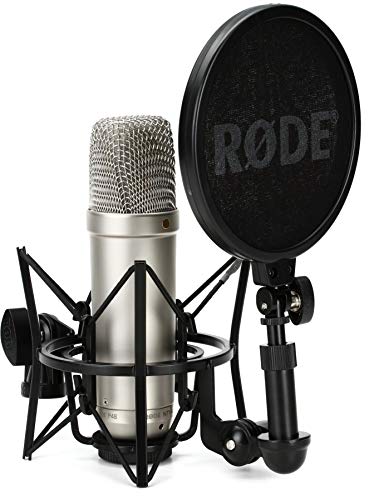
Type: Large-diaphragm condenser XLR microphone
Best for: Serious beginners, intermediate creators, excellent value
Why it's great for ASMR:
The NT1-A is one of the quietest microphones in the world (5dB self-noise) and comes with everything you need except an audio interface. It's the perfect balance of price and performance.
Key features:
- 5dB self-noise – One of the quietest mics available
- Incredible sensitivity – Captures whisper-quiet sounds beautifully
- Cardioid polar pattern – Focused pickup with background rejection
- Complete bundle – Includes shock mount, pop shield, XLR cable, dust cover
- Gold-plated diaphragm – Durable and consistent performance
- 100-ohm impedance – Easy to connect to any interface
What makes it special:
The NT1-A is a modern classic. It's been the go-to choice for home studio vocals for decades because it delivers professional results at a mid-tier price. For ASMR, its low self-noise is crucial—you can record whispers without introducing mic hiss.
Real-world performance:
- Exceptionally quiet (no mic hiss, even with high gain)
- Detailed capture of subtle sounds
- Warm, present vocal tone perfect for whispers
- Excellent dynamic range
- Handles quiet to moderate volume without issues
Who should buy it:
This is the mic I recommend most often for ASMR creators who:
- Are serious about content quality
- Have a budget around $250
- Want professional results without professional prices
- Need XLR flexibility for future upgrades
Who shouldn't buy it:
If you specifically need binaural recording, get a 3Dio. If you're on a tighter budget and just experimenting, the Behringer C-1 or a USB mic might be better.
Important note: The NT1-A is sometimes confused with the NT1 (a newer model). The NT1-A is the classic version and usually the better value with its complete bundle.
Pros:
✅ One of the quietest microphones available
✅ Excellent value with complete accessory bundle
✅ Professional-quality sound
✅ Perfect sensitivity for ASMR
✅ Warm, detailed tone
✅ Trusted by thousands of content creators
Cons:
❌ Can be overly sensitive for some users
❌ Not binaural
❌ Requires audio interface and phantom power
❌ Sensitive to room acoustics
Bottom line: The best value in ASMR microphones—professional quality at a mid-tier price.
6. Audio-Technica AT2020 – The Reliable Workhorse
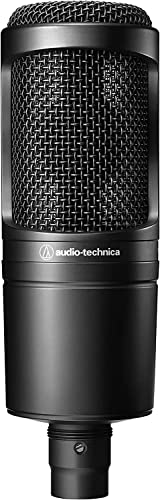
Type: Large-diaphragm condenser XLR microphone
Best for: Budget-conscious quality seekers, versatile recording
Why it's great for ASMR:
The AT2020 is one of the most popular entry-level studio microphones in the world. It's affordable, reliable, and sounds significantly better than consumer mics.
Key features:
- Wide frequency response – Captures full range from lows to highs
- High SPL handling – Can handle loud sounds without distortion (useful for varied content)
- Low noise level – Minimal self-noise for the price point
- Cardioid polar pattern – Directional pickup reduces background noise
- Custom low-mass diaphragm – Good transient response for detailed sounds
- Integral 3-pin XLR output – Professional connection
What makes it special:
The AT2020 is the “everyone's first studio mic” for good reason. It's reliable, sounds good, and works for ASMR, podcasting, music, and more. Versatility and reliability at a great price.
Real-world performance:
- Clear whisper capture
- Good detail on trigger sounds
- Decent noise floor (not as quiet as NT1-A)
- Reliable performance across different content types
- Handles a variety of sounds well
Who should buy it:
Great for:
- Creators on a $100 budget
- People who want one mic for multiple uses (ASMR, podcasting, music)
- Beginners who want quality without spending $250+
- Secondary mic for multi-mic setups
Who shouldn't buy it:
If you can stretch to $250, the Rode NT1-A is worth the extra investment for ASMR-specific use. The NT1-A's lower self-noise makes a real difference for whisper content.
Important note: There's also an AT2020USB+ version with built-in USB interface. It's more convenient but has lower sound quality than the XLR version with a proper interface.
Pros:
✅ Excellent value at ~$100
✅ Good all-around performance
✅ Versatile for multiple content types
✅ Reliable build quality
✅ Low noise for the price
✅ Easy to use
Cons:
❌ Slightly harsh highs (can be EQ'd out)
❌ Not as quiet as more expensive mics
❌ Not binaural
❌ Basic accessories (no shock mount included)
Bottom line: Solid, reliable quality at an entry-level price.
7. Logitech Blue Yeti – The USB Convenience King

Type: Multi-pattern condenser USB microphone
Best for: Beginners, plug-and-play simplicity, desktop ASMR
Why it's great for ASMR:
The Blue Yeti is the most popular USB microphone in the world. It's ridiculously easy to use (plug in and record), has multiple pickup patterns, and sounds surprisingly good for ASMR.
Key features:
- Tri-capsule array – Three microphone capsules for versatile recording
- Four pickup patterns – Cardioid, stereo, omnidirectional, bidirectional
- Zero-latency monitoring – Built-in headphone jack for real-time listening
- Gain control and mute – Easy controls directly on the mic
- Internal shock mount – Reduces vibration and handling noise
- USB powered – No external power needed
- Customizable RGB lighting – Optional cosmetic feature
What makes it special:
The Yeti is beloved because it removes all technical barriers. Plug it into your computer via USB, select it as your input, and start recording. No audio interface, no XLR cables, no phantom power—just pure simplicity.
For ASMR specifically:
- Stereo mode creates basic left/right separation (not true binaural, but adds dimension)
- Cardioid mode works great for whispers and speaking
- Omnidirectional captures room atmosphere and ambient sounds
- High sensitivity captures quiet sounds well
Real-world performance:
- Clear whisper capture (though not as detailed as XLR mics)
- Good sensitivity for quiet sounds
- Stereo mode adds spatial interest
- Convenient for desktop ASMR recording
- Prone to picking up keyboard/mouse sounds
Who should buy it:
Perfect for:
- Complete beginners who want simplicity
- Creators making desktop ASMR (typing, tapping on objects)
- People who don't want to invest in audio interfaces
- Streamers who also want to do ASMR content
- Anyone prioritizing convenience over ultimate quality
Who shouldn't buy it:
If you're serious about ASMR long-term, you'll eventually want to upgrade to an XLR setup. The Yeti is great for starting, but you can't upgrade it the way you can upgrade XLR systems.
Important note: Place the Yeti on a shock mount or isolation pad and away from your keyboard. It picks up desk vibrations and computer noise easily.
Pros:
✅ Incredibly easy to use (plug and play)
✅ No audio interface needed
✅ Multiple pickup patterns
✅ Built-in headphone monitoring
✅ Great for beginners
✅ Versatile for multiple content types
Cons:
❌ Not as detailed as XLR mics
❌ “Stereo mode” isn't true binaural
❌ Picks up keyboard and desk noise easily
❌ Can't upgrade like XLR systems
❌ Some users find advanced features confusing
Bottom line: The best USB microphone for ASMR beginners who want plug-and-play simplicity.
Types of ASMR Microphones
Binaural Microphones (The ASMR Gold Standard)
What they are: Two microphones separated by approximately the distance between human ears, often housed in realistic ear-shaped structures.
How they work: When you listen with headphones, your brain interprets the slight timing and volume differences between left and right channels as 3D positional information—just like your actual ears.
Best for:
- Professional ASMR creators
- Binaural roleplays (haircut, spa, medical)
- Trigger videos with spatial movement
- Creating the most immersive ASMR experience
Example: 3Dio Free Space Binaural Microphone (the industry standard)
Price range: $500 – $2,000+
Large-Diaphragm Condenser Microphones
What they are: Studio-quality microphones with large capsules (typically 1 inch diameter) designed to capture detail and warmth.
How they work: Large diaphragm responds to subtle air pressure changes, capturing quiet sounds with high sensitivity and low noise.
Best for:
- Whisper ASMR
- Mouth sounds
- Soft speaking
- Traditional ASMR where binaural isn't critical
- Budget-conscious creators who want quality
Examples: Rode NT1-A, AKG C214, Audio-Technica AT2020
Price range: $100 – $600
USB Microphones
What they are: Microphones with built-in audio interfaces that connect directly to your computer via USB.
How they work: The analog-to-digital conversion happens inside the microphone, so you don't need additional audio equipment.
Best for:
- Beginners
- Simple setups
- Podcasting-style ASMR
- Creators who don't want to invest in audio interfaces
Examples: Blue Yeti, Blue Yeti X, Rode NT-USB
Price range: $100 – $300
Limitations:
- Generally lower quality than XLR microphones
- Less flexibility for upgrades
- Can't easily use professional audio gear
XLR Microphones (Professional Choice)
What they are: Professional microphones that require an audio interface or mixer with XLR inputs and phantom power.
How they work: XLR connection provides clean, balanced signal. Audio interface converts analog signal to digital for your computer.
Best for:
- Serious ASMR creators
- Professional productions
- Creators who want upgrade flexibility
- Anyone wanting the absolute best quality
Examples: Shure SM7B, Neumann TLM 103, AKG C214
Price range: $100 – $3,000+
Additional equipment needed:
- Audio interface ($100-$500)
- XLR cables ($10-$50)
- Mic stand ($20-$100)
- Possibly a cloudlifter for extra gain ($150).
EDM Sauce is reader-supported. We may earn a commission through products purchased using links on this page. Learn more about our process here.
What to Consider When Choosing an ASMR Microphone
1. Connectivity Type: USB vs. XLR
USB Microphones:
Pros:
- Plug-and-play simplicity
- No additional equipment needed
- Lower upfront cost
- Perfect for beginners
Cons:
- Lower overall quality ceiling
- Can't upgrade or expand easily
- Limited professional options
- Some have latency issues
Best for: Beginners, casual creators, streamers
Recommended USB mics: Blue Yeti, Rode NT-USB, Audio-Technica ATR2500x
XLR Microphones:
Pros:
- Professional quality
- Upgradeable system
- Better preamps and signal path
- Industry standard
- More microphone options
Cons:
- Requires audio interface ($100-500)
- More complex setup
- Higher upfront cost
- Learning curve
Best for: Serious creators, anyone wanting professional quality
Additional equipment needed:
- Audio interface – Focusrite Scarlett 2i2 ($160), PreSonus AudioBox ($100)
- XLR cable – Decent cable $15-30
- Mic stand/boom arm – $20-100
- Shock mount – Often included, or $20-50
Recommended XLR mics: Rode NT1-A, Shure SM7B, AKG C214
2. Binaural vs. Standard Recording
Do you need binaural?
Choose binaural if:
- You want the most immersive ASMR experience
- Your content focuses on spatial triggers (ear-to-ear, movements)
- You're doing roleplay scenarios with positional audio
- You have the budget ($500-$2,000)
- You're serious about professional ASMR content
Skip binaural if:
- You're primarily doing whisper/speaking ASMR
- Your content is trigger compilations without spatial movement
- You're on a budget
- You're just starting out
Binaural options:
- 3Dio Free Space – $1,500 (professional standard)
- Soundman OKM II – $400-500 (in-ear binaural)
- DIY binaural – Two matched small-diaphragm condensers ($200-400)
3. Budget Considerations
Under $150:
- Blue Yeti USB (~$100-140)
- Audio-Technica AT2020 (~$100) + Budget interface
- Behringer C-1 (~$50) + Behringer interface (~$100)
$150-300:
- Rode NT1-A (~$250 with accessories)
- Audio-Technica AT2020 + Focusrite Scarlett Solo
- Blue Yeti X (upgraded USB option)
$300-500:
- Shure SM7B ($400) + Interface
- AKG C214 ($400) + Interface
- Rode NT1 + Quality interface
$500-1,000:
- Entry-level binaural setup
- High-end condenser + Premium interface
- Multiple microphones for stereo recording
$1,000+:
- 3Dio Free Space (~$1,500)
- Professional multi-mic setup
- Premium interface and accessories
4. Self-Noise (Critical for ASMR!)
Self-noise is the inherent hiss a microphone produces. For ASMR's quiet whispers, this matters tremendously.
Excellent (under 10dB):
- Rode NT1-A: 5dB (one of the quietest)
- Rode NT1: 4.5dB (slightly quieter)
- Neumann TLM 103: 7dB (professional)
Good (10-15dB):
- Audio-Technica AT2020: ~12dB
- AKG C214: ~13dB
Acceptable (15-20dB):
- Blue Yeti: ~15dB
- Behringer C-1: ~18dB
Rule of thumb: For whisper-heavy ASMR, aim for under 10dB self-noise. For trigger sounds and louder content, up to 15dB is acceptable.
5. Pickup Patterns
Cardioid – Heart-shaped pickup, front-focused
- Best for: Whispers, speaking ASMR, rejecting room noise
- Most common for ASMR
Omnidirectional – Picks up sound equally from all directions
- Best for: Ambient ASMR, room atmosphere, natural sound
- Less common
Bidirectional (Figure-8) – Picks up front and back, rejects sides
- Best for: Two-person ASMR, interviews
- Rare in ASMR
Stereo – Left/right separation (not true binaural)
- Best for: Basic spatial audio on USB mics
- Blue Yeti offers this mode
Multiple patterns: Some mics (Blue Yeti, Rode NT-USB+) offer switchable patterns for versatility.
6. Sensitivity
High sensitivity (important for ASMR):
- Captures quiet sounds without cranking gain
- Picks up subtle details and textures
- Can also pick up unwanted background noise
Lower sensitivity:
- Requires more gain (introduces noise)
- Misses delicate details
- Less ideal for whisper ASMR
Most condenser mics have good sensitivity for ASMR. Dynamic mics (like Shure SM7B) have lower sensitivity and need high-gain preamps.
7. Additional Features to Consider
Built-in shock mount:
- Reduces handling noise and vibration
- Essential for desktop ASMR
- Examples: Blue Yeti, AKG C214
Pop filter included:
- Reduces plosives (P, B sounds)
- Essential for whisper ASMR
- Rode NT1-A includes one
Headphone monitoring:
- Real-time listening while recording
- Catch issues immediately
- Blue Yeti has this built-in
Mute button:
- Quick mute between takes
- Convenient for streaming
- Blue Yeti and some interfaces offer this
Adjustable gain:
- Control sensitivity on the mic itself
- Convenient for quick adjustments
- Common on USB mics
8. Warranty and Support
Look for:
- Minimum 1-year warranty
- Reputable brand with good support
- Easy replacement/repair process
Best warranties:
- Rode: Excellent lifetime warranty (with registration)
- Audio-Technica: Good warranty and support
- Shure: Professional support network
Avoid:
- Unknown brands with no warranty
- Used mics without warranty transfer
- Suspiciously cheap “professional” mics
Frequently Asked Questions
What kind of microphone is used for ASMR?
The most common types are:
- Binaural microphones (3Dio, Soundman) – Best for immersive, spatial ASMR
- Large-diaphragm condensers (Rode NT1-A, AKG C214) – Great for whispers and detailed sounds
- USB condensers (Blue Yeti) – Good for beginners and convenience
Professional ASMR creators often use binaural microphones for the 3D audio experience. However, quality large-diaphragm condensers work excellently for non-binaural ASMR content.
Can you record ASMR with your iPhone?
Yes, but the quality will be limited. Modern iPhones have surprisingly good microphones, and there are apps designed for ASMR recording:
- Dolby On (free, good processing)
- Rode Rec (professional features)
- Voice Record Pro (flexible options)
However:
- iPhone mics aren't truly binaural
- Limited control over gain and processing
- Higher self-noise than dedicated mics
- No professional XLR quality
iPhone is fine for: Testing ASMR ideas, personal use, casual content
Upgrade to dedicated mic when: You're serious about content quality, want to monetize, need professional results
What mic does Amouranth use for ASMR?
Amouranth uses the 3Dio FS Pro II, an upgraded version of the 3Dio Free Space. It's the professional standard for ASMR content creators and costs around $1,500-2,000.
Many top ASMR creators use the 3Dio because it provides the most authentic binaural experience available.
Do I need an audio interface for ASMR?
You need an interface if:
- You're using an XLR microphone (Rode NT1-A, Shure SM7B, etc.)
- You want professional quality
- You plan to upgrade your setup over time
You DON'T need an interface if:
- You're using a USB microphone (Blue Yeti, Rode NT-USB)
- You're just starting out and want simplicity
Recommended beginner interfaces:
- Focusrite Scarlett Solo (~$110) – One mic input
- Focusrite Scarlett 2i2 (~$160) – Two mic inputs
- PreSonus AudioBox USB 96 (~$100) – Budget option
What's better for ASMR: USB or XLR?
USB is better if:
- You're a beginner
- You want plug-and-play simplicity
- You're on a tight budget
- You don't want technical complexity
XLR is better if:
- You want professional quality
- You plan to upgrade over time
- You're serious about content creation
- You have the budget for interface + mic
The truth: XLR systems sound better and offer more flexibility, but USB is perfect for starting out. Many creators start with USB (Blue Yeti) and upgrade to XLR (Rode NT1-A) later.
How much should I spend on an ASMR microphone?
Budget recommendations by experience level:
Complete beginner exploring ASMR: $100-150 – Blue Yeti USB or Behringer C-1 + interface
Serious beginner who knows they'll continue: $200-300 – Rode NT1-A or Audio-Technica AT2020 + Focusrite Scarlett
Intermediate creator growing a channel: $400-600 – Shure SM7B or AKG C214 + quality interface
Professional creator/serious enthusiast: $1,500-2,000 – 3Dio Free Space binaural system
Start with your budget and upgrade as your channel grows.
Do I need a pop filter for ASMR?
Yes, especially for whisper ASMR.
Pop filters reduce plosive sounds (P, B, T) that can cause distortion and harshness in whisper recordings.
Options:
- Foam windscreen – Cheap ($5-10), reduces but doesn't eliminate plosives
- Mesh pop filter – Better ($10-20), more effective
- Metal pop filter – Professional ($30-50), best results
Some microphones (Rode NT1-A, Shure SM7B) include pop filters. If yours doesn't, budget $10-20 for one.
What's the difference between stereo and binaural recording?
Stereo recording:
- Two microphones/channels (left and right)
- Basic spatial separation
- Sounds “wide” but not necessarily 3D
- Example: Blue Yeti in stereo mode
Binaural recording:
- Two microphones positioned like human ears
- Creates 3D spatial audio when listened to with headphones
- Sounds appear to come from specific locations (left ear, behind, etc.)
- Requires binaural microphone (3Dio) or in-ear mics
For ASMR: True binaural is far more immersive, but stereo is better than mono.
Can I use my gaming headset mic for ASMR?
Technically yes, but the results will be poor:
- Gaming headset mics are designed for communication, not quality
- High self-noise and low sensitivity
- Poor frequency response
- No stereo or binaural capability
It's better than nothing for: Testing if you enjoy creating ASMR, personal recordings
Upgrade as soon as possible if: You want to share content publicly, grow a channel, or create quality recordings
Even a $50 Behringer C-1 will sound dramatically better than any gaming headset.
Final Recommendations
Best Overall: Rode NT1-A
For most ASMR creators, the Rode NT1-A ($250) offers the perfect balance of quality, price, and value. It's incredibly quiet (5dB self-noise), captures whispers beautifully, and comes with everything you need except an audio interface.
Add: Focusrite Scarlett Solo ($110) and you have a professional ASMR setup for $360.
Best for Beginners: Blue Yeti
If you're just starting out and want simplicity, the Blue Yeti (~$100-140) can't be beaten. Plug it in, start recording, and upgrade later when you're ready.
Best Professional: 3Dio Free Space
For serious ASMR creators who want the ultimate binaural experience, the 3Dio Free Space ($1,500) is the industry standard. It's used by top ASMR YouTubers worldwide for good reason.
Best Budget: Behringer C-1
If you're on a tight budget but want XLR quality, the Behringer C-1 (~$50-70) plus a budget interface gives you professional connections and decent sound for under $150.
Best for Whispers: Shure SM7B
For pure vocal quality and smooth whispers, the Shure SM7B ($400) is unmatched. Add a Cloudlifter ($150) and proper interface for the ultimate whisper ASMR setup.
Your Next Steps
1. Determine your budget
- Beginner: $100-150
- Serious: $250-400
- Professional: $500-2,000+
2. Choose your priority
- Binaural immersion → 3Dio
- Vocal quality → Shure SM7B or Rode NT1-A
- Ease of use → Blue Yeti
- Best value → Rode NT1-A
3. Get started The best ASMR microphone is the one you actually use. Don't wait for the perfect setup—start creating with what you can afford and upgrade as you grow.
The ASMR community is waiting to experience the tingles you create. 🎙️
Recommended Reading: