
You're scrolling through Spotify. You see a playlist called “EDM Bangers.” You click it. The first track is a thumping house anthem with a massive drop. The second is melodic trance with ethereal vocals. The third is aggressive dubstep that sounds like robots fighting.
These songs sound nothing alike. So why are they all called EDM?
Welcome to the most confusing, most debated, and most misunderstood term in modern music: EDM.
EDM stands for Electronic Dance Music. Which should be simple, right? It's dance music made electronically. Except it's not that simple. Because depending on who you ask, EDM either means:
Option 1: ALL electronic dance music ever made—house, techno, trance, drum and bass, dubstep, everything. An umbrella term covering 50+ years of electronic music history.
Option 2: A specific style of big, commercial, festival-focused electronic music that exploded in America in the early 2010s—think massive drops, stadium sound, fist-pumping anthems. The stuff Swedish House Mafia, Skrillex, and Avicii made famous.
Ask a DJ in Berlin what EDM is, and they'll tell you it's an Americanized marketing term for commercial festival music that real electronic music purists hate. Ask a 20-year-old at Electric Daisy Carnival, and they'll tell you EDM is just another word for electronic dance music in general.
Both are technically correct. Which is exactly the problem.
The term “EDM” has become so overloaded, so commercialized, and so divisive that even people who make electronic music can't agree on what it means. Some embrace it. Some refuse to be associated with it. Some use it as an insult.
But here's what everyone agrees on: EDM—however you define it—is one of the most popular, most profitable, and most culturally influential music movements of the 21st century.
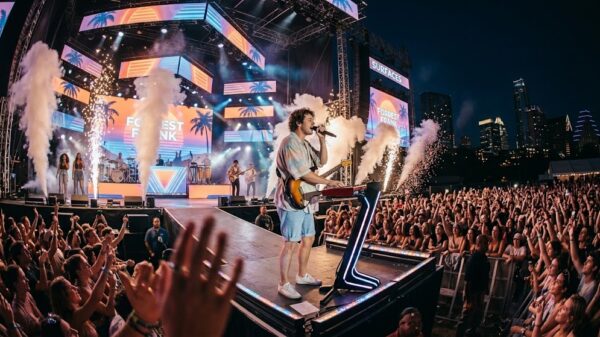
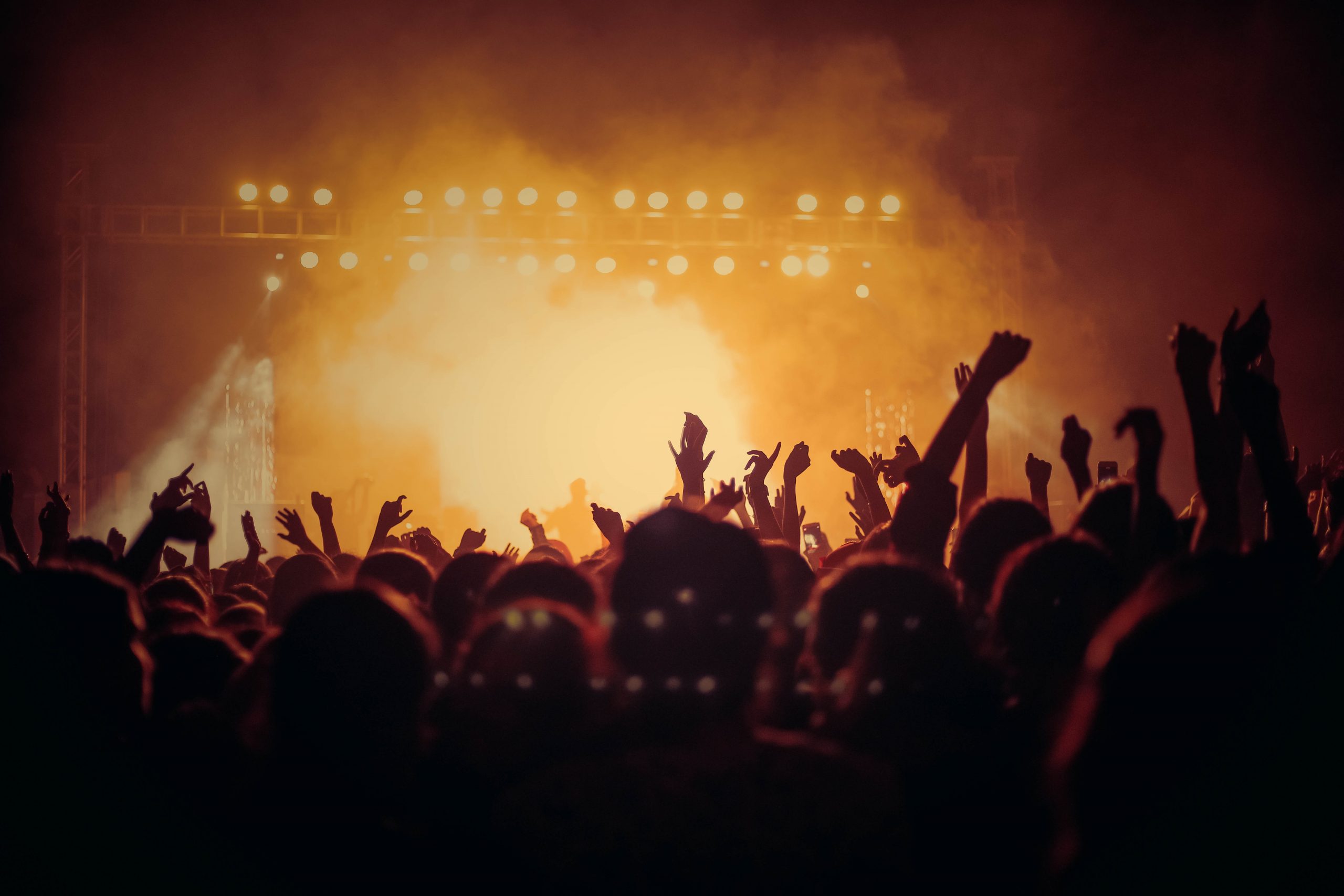
Electronic dance music festivals sell hundreds of thousands of tickets. DJs headline arenas and make millions. EDM tracks dominate pop radio. Artists like Calvin Harris, The Chainsmokers, and Marshmello collaborate with the biggest names in music. The global EDM industry is worth over $7 billion.
So what is EDM? Where did it come from? Why is the term so controversial? And how did electronic dance music go from underground raves to selling out stadiums?
Let's break it down.
The Definition (And Why It's Complicated)
The simple answer: EDM is electronic dance music—music made using synthesizers, drum machines, computers, and digital audio workstations (DAWs), designed specifically for people to dance to.
The accurate answer: EDM is an umbrella term that encompasses dozens of subgenres, each with its own sound, culture, and history, including house, techno, trance, dubstep, drum and bass, hardstyle, trap, and hundreds of micro-genres.
The controversial answer: EDM is a marketing term pushed by the American music industry in the early 2010s to rebrand rave culture and sell electronic music to mainstream audiences. It specifically refers to commercial, festival-friendly electronic music—the big drops, the hands-in-the-air anthems, the stadium sound.
The Core Characteristics of EDM:
Regardless of which definition you use, most EDM shares these traits:
1. Electronic Production
- Made using synthesizers, drum machines, samplers, and computers
- Digital audio workstations (DAWs) like Ableton Live, FL Studio, Logic Pro
- Heavy use of samples, loops, and digital effects
2. Strong Rhythmic Emphasis
- Designed to make people dance
- Usually built around a 4/4 beat (four beats per measure)
- Tempo ranges from 120-150 BPM (beats per minute) for most subgenres
- Some genres go slower (downtempo, chill) or faster (drum and bass at 160-180 BPM, hardcore at 200+ BPM)
3. DJ Culture
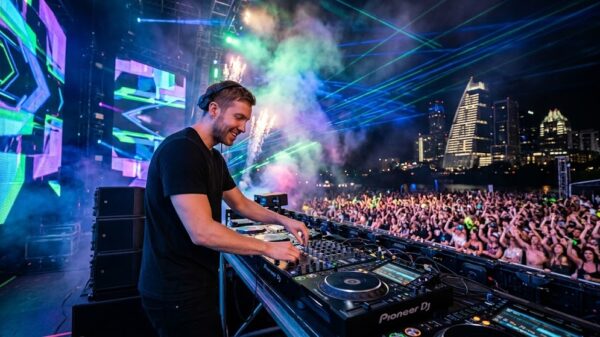
- Created primarily for DJs to play in clubs, festivals, and raves
- Tracks are structured for seamless mixing (long intros/outros)
- The DJ is often the main “performer”
4. Repetition and Build-Ups
- Looped patterns create hypnotic, trance-like states
- Build-ups and “drops” create energy peaks
- Breakdowns provide moments of relief before the next build
5. Emphasis on Production Over Live Instrumentation
- Most EDM is entirely produced in-the-box (on a computer)
- Live instruments occasionally used, but primarily as samples or garnish
- Vocals often feature but are treated as texture, not focal point
The History: From Disco to Dubstep
EDM didn't appear out of nowhere. It evolved over 50+ years from disco, dub, synth-pop, and countless underground scenes.
The 1970s: Disco and the Birth of Dance Music
EDM's origin story begins with disco.
In the early 1970s, disco music took over nightclubs in New York City. DJs like David Mancuso and Larry Levan played extended dance mixes, using two turntables to blend songs together and keep people dancing all night.
Key innovations:
- Drum machines (early Roland rhythm machines)
- Four-on-the-floor beats (steady kick drum on every beat—boom boom boom boom)
- DJ culture (mixing records to create continuous music)
1974: “Rock Your Baby” by George McCrae – One of the first disco hits to use a drum machine and electronic rhythm.
1977: “I Feel Love” by Donna Summer (produced by Giorgio Moroder) – A fully synthesized disco track that many consider the birth of modern electronic dance music. Moroder himself called it “really the start of electronic dance.”
Meanwhile, in Jamaica:
- Dub music pioneers like King Tubby were creating electronic soundscapes by manipulating reggae tracks with echo, reverb, and effects
- This influenced hip-hop DJing and electronic production techniques
Meanwhile, in Germany:
- Kraftwerk was creating cold, robotic electronic music that would influence techno, electro, and synth-pop for decades
The 1980s: House, Techno, and the Rave Revolution
Disco died commercially around 1980 (thanks to the infamous “Disco Demolition Night” backlash). But underground DJs kept the spirit alive—and evolved it.
Chicago House (Early 1980s):
- Frankie Knuckles, DJ at The Warehouse (a gay club in Chicago), started editing disco tracks on reel-to-reel tape
- Added drum machines (Roland TR-808, TR-909) to extend grooves
- Created a new sound: house music (named after The Warehouse)
- Characterized by: 4/4 beats, repetitive basslines, sampled vocals, soulful energy
Detroit Techno (Mid-1980s):
- The “Belleville Three” (Juan Atkins, Derrick May, Kevin Saunderson) created techno in Detroit
- More mechanical, futuristic, and minimalist than house
- Influenced by Kraftwerk and funk
- Derrick May's “Strings of Life” (1987) – Still considered a techno classic
Rave Culture (Late 1980s):
- Acid house (using the Roland TB-303 bass synthesizer) explodes in the UK
- Illegal warehouse parties and outdoor raves emerge
- MDMA (ecstasy) becomes associated with rave culture
- The “Second Summer of Love” (1988-1989) – UK rave culture peaks
Key characteristics:
- Underground, anti-establishment
- All-night dancing in warehouses, fields, secret locations
- PLUR philosophy (Peace, Love, Unity, Respect)
- Government crackdowns begin (raves seen as drug havens)
The 1990s: Trance, Drum and Bass, and Global Expansion
The '90s saw electronic music splinter into countless subgenres.
Trance (Early 1990s):
- Melodic, euphoric, hypnotic
- Build-ups, breakdowns, emotional peaks
- Pioneers: Paul Oakenfold, Armin van Buuren, Tiësto, Paul van Dyk
- Designed to put dancers in a trance-like state
Drum and Bass / Jungle (Mid-1990s):
- Fast breakbeats (160-180 BPM)
- Heavy basslines
- UK-originated
- Subgenres: liquid, neurofunk, jump-up
Dubstep (Late 1990s, popularized 2000s):
- Originated in South London
- Half-time beats (feels slower despite high BPM)
- Wobbling basslines, sparse drums
- Skrillex brought aggressive “brostep” to America in 2010-2011
Big Beat (Late 1990s):
- The Chemical Brothers, Fatboy Slim, The Prodigy
- Rock-influenced electronic music
- Broke into mainstream (The Prodigy's “Firestarter,” Fatboy Slim's “Praise You”)
In America: Electronic music remained mostly underground, except for brief “electronica” hype in the late '90s that fizzled.
The 2000s: The Slow Build Toward Mainstream
Early 2000s:
- EDM still niche in America
- Thriving in Europe (Ibiza, UK club scene, massive European festivals)
- Daft Punk releases landmark albums (Discovery 2001, Human After All 2005)
- Festivals like Ultra Music Festival (Miami, started 1999) and Electric Daisy Carnival (Los Angeles, started 1997) grow steadily
Mid-2000s:
- Electro house emerges (Deadmau5, Benny Benassi, Justice)
- Swedish House Mafia forms (2008) – becomes first EDM supergroup
- Dubstep starts gaining traction
Late 2000s:
- David Guetta starts collaborating with pop artists
- Electronic elements creep into pop music
- American audiences slowly warming up
The 2010s: EDM Conquers America
This is when everything changed.
2010-2012: The EDM Explosion
The American music industry decided electronic music was the next big thing and pushed it HARD.
Key moments:
- Skrillex releases Scary Monsters and Nice Sprites EP (2010) – dubstep goes mainstream
- Avicii's “Levels” (2011) – massive crossover hit
- Swedish House Mafia becomes first EDM act to sell out Madison Square Garden (2011)
- David Guetta dominates pop radio with collaborations (Sia, Nicki Minaj, Usher)
The American music industry rebrands rave culture as “EDM”:
- Previously called “electronica,” “dance music,” “club music”
- “EDM” marketed as fresh, exciting, youth-oriented
- Festivals explode in size and profitability
2013-2014: Peak EDM
EDM becomes a $7 billion global industry.
Festival culture explodes:
- Electric Daisy Carnival: 345,000+ attendees
- Tomorrowland (Belgium): 400,000+ attendees over two weekends
- Ultra Music Festival: 165,000+ attendees
- Coachella adds electronic headliners
Pop music absorbs EDM:
- Calvin Harris becomes highest-paid DJ ($66 million/year)
- The Chainsmokers dominate charts
- Justin Bieber, Rihanna, Coldplay all collaborate with EDM producers
2014: Daft Punk wins Album of the Year Grammy for Random Access Memories – First EDM act to win the prestigious award.
2015-Present: Diversification and Backlash
EDM splits into two camps:
1. Mainstream/Commercial EDM:
- Festival anthems, radio-friendly, pop collaborations
- The Chainsmokers, Marshmello, Kygo, Martin Garrix
- Criticized by purists as formulaic and overproduced
2. Underground Electronic Music:
- Techno, deep house, experimental bass music
- Rejects “EDM” label
- Berlin, London, Detroit scenes remain vibrant
- Artists like Four Tet, Jon Hopkins, Bicep, Charlotte de Witte
The backlash: Many electronic music purists refuse to call their music “EDM,” seeing it as a commercialized American marketing term that doesn't represent underground electronic music culture.
The Major Genres of EDM
EDM is not a monolith. It's an umbrella term covering dozens of styles:
House
- BPM: 120-130
- Characteristics: 4/4 beat, soulful vocals, repetitive grooves
- Subgenres: Deep house, progressive house, tech house, electro house, future house
- Artists: Frankie Knuckles, Daft Punk, Disclosure, Duke Dumont
Techno
- BPM: 120-150
- Characteristics: Hypnotic, repetitive, mechanical, minimal vocals
- Subgenres: Detroit techno, minimal techno, acid techno
- Artists: Carl Cox, Richie Hawtin, Adam Beyer, Charlotte de Witte
Trance
- BPM: 125-150
- Characteristics: Melodic, euphoric, build-ups/breakdowns, emotional
- Subgenres: Progressive trance, uplifting trance, psytrance
- Artists: Armin van Buuren, Tiësto, Paul van Dyk, Above & Beyond
Dubstep
- BPM: 140 (but feels like 70 due to half-time drums)
- Characteristics: Wobbling basslines, sparse drums, heavy drops
- Subgenres: Brostep (aggressive), deep dubstep, riddim
- Artists: Skrillex, Excision, Zomboy, Subtronics
Drum and Bass
- BPM: 160-180
- Characteristics: Fast breakbeats, heavy bass, energy
- Subgenres: Liquid, neurofunk, jungle
- Artists: Pendulum, Noisia, Netsky, Andy C
Trap (EDM Trap, not Hip-Hop Trap)
- BPM: 140-150
- Characteristics: Hip-hop influenced, aggressive, heavy 808 bass
- Artists: RL Grime, Flosstradamus, Baauer
Hardstyle
- BPM: 140-150
- Characteristics: Distorted kicks, euphoric melodies, aggressive
- Popular in: Netherlands, Australia
- Artists: Headhunter, Brennan Heart, Wildstylez
The Culture: Raves, Festivals, and PLUR
EDM isn't just music—it's a culture.
Raves (Underground Parties)
- Small, illegal or semi-legal gatherings
- Warehouses, secret locations, outdoor spaces
- Focus on music and community, not commercial spectacle
- Often associated with drug use (MDMA, ketamine, LSD)
Festivals (Mainstream Spectacle)
- Massive outdoor events (50,000-400,000+ attendees)
- Multiple stages, elaborate production (lasers, LED screens, pyrotechnics)
- Electric Daisy Carnival, Tomorrowland, Ultra, Coachella
- Expensive tickets ($300-$500+)
PLUR Philosophy
- Peace, Love, Unity, Respect
- Rave culture's core values
- Emphasis on acceptance, positivity, togetherness
- Often criticized as naive or hollow in commercial festival settings
The Drug Association
Electronic music has always been associated with drug culture, particularly:
- MDMA/Ecstasy (enhances music, increases empathy)
- LSD (psychedelic experiences)
- Ketamine (dissociative effects)
This association has led to:
- Government crackdowns on raves
- Festival bans and regulations
- Moral panic about “rave culture”
- Ongoing harm reduction efforts (DanceSafe, The Loop)
How EDM Is Made
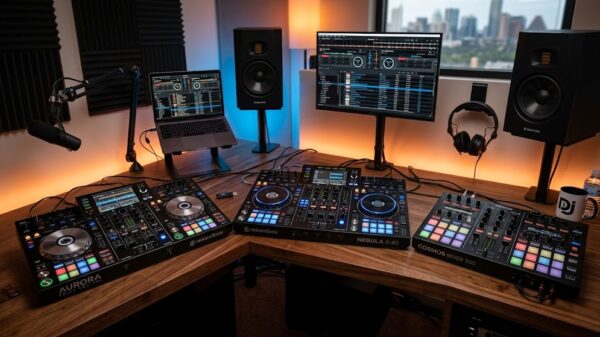
Most EDM is produced entirely on computers using:
Digital Audio Workstations (DAWs):
- Ableton Live (most popular for EDM)
- FL Studio
- Logic Pro
- Cubase
Synthesizers (Virtual and Hardware):
- Serum, Massive, Omnisphere (software)
- Moog, Roland, Korg (hardware)
Samples and Loops:
- Drum samples, vocal chops, loops
- Splice, Loopmasters, sample packs
The Production Process:
- Create drums (kick, snare, hi-hats)
- Add bassline
- Add melody/chords
- Arrange (intro, build-up, drop, breakdown, outro)
- Mix and master
No live instruments required. Everything can be programmed, sequenced, and manipulated digitally.
The Terminology Debate: Is It EDM or Electronic Music?
Here's where it gets controversial.
Team “EDM Is Fine”:
- It's just an acronym for electronic dance music
- Easy, recognizable term
- Who cares what you call it?
Team “EDM Is An Insult”:
- It's a commercial marketing term
- Reduces decades of diverse electronic music history to one label
- Associated with cheesy, formulaic festival music
- Real electronic music fans say “house,” “techno,” “drum and bass”—not “EDM”
The compromise: Use EDM as an umbrella term, but specify genres when possible.
The Bottom Line: What Is EDM?
EDM is:
- Electronic dance music (made electronically, designed for dancing)
- An umbrella term covering house, techno, trance, dubstep, and 50+ other genres
- A marketing term pushed by the American music industry in the 2010s
- A cultural movement with festivals, raves, and PLUR philosophy
- A global phenomenon worth over $7 billion
- A divisive label loved by mainstream fans, rejected by underground purists
It's disco's great-grandchild. It's the soundtrack to millions of festivals and raves. It's both underground counterculture and mainstream pop music. It's music made by humans using machines to make other humans move.
Call it EDM. Call it electronic music. Call it house, techno, or whatever specific genre you're talking about.
Just don't call it a passing trend. Electronic dance music—whatever you want to name it—isn't going anywhere.
Now go find a festival, put your hands in the air, and lose yourself in the drop.
Welcome to EDM.