



Porter Robinson Drops The Second Release As Virtual Self – ‘Ghost Voices’

In November 2017, Porter Robinson released “Ghost Voices” — the second track under his Virtual Self alias — and delivered what many consider the defining moment of the project. Where the first Virtual Self release “Eon Break” had introduced the alias with frenetic, aggressive energy, “Ghost Voices” showed the full range of Robinson’s ambition: a track that moved from deep, almost spectral atmospheres into transcendent euphoria over the course of six minutes.
The Sound
“Ghost Voices” opens with a haunting, submerged tone — vocals processed into something barely human, floating over sparse percussion and dark pads. The track builds patiently, layering elements with the precision of someone who has spent years studying how dance music creates emotional momentum. When the drop arrives, it doesn’t hit with the wall-of-sound approach of Robinson’s earlier work. Instead, it blooms — bright, soaring synths that feel like they’re pulling the listener upward.
The production drew from a sonic palette Robinson had been quietly exploring: trance, happy hardcore, DDR-era video game music, and the early 2000s Japanese electronic scene. Critics and fans quickly categorized it as “neo-trance,” a term that Robinson didn’t coin but didn’t reject either. The label was apt — “Ghost Voices” had the emotional sweep and build-release structure of classic trance, but filtered through a modern production sensibility that felt unmistakably contemporary.
Virtual Self in Context
The Virtual Self project was Robinson’s answer to a creative problem he had been wrestling with publicly. After the massive success of his 2014 album Worlds — an album that essentially created the “future bass” blueprint that dominated electronic music for years afterward — Robinson had spoken openly about the pressure of follow-up expectations and the difficulty of making music that felt authentic while carrying the weight of a genre-defining debut.
Virtual Self was a deliberate departure. Where Worlds was dreamy, wistful, and built around human vocals and emotional songwriting, Virtual Self was harder, faster, and rooted in the rave aesthetics of the late 1990s and early 2000s. Robinson created an entire visual and thematic world for the project — a retro-futuristic web presence, a distinct visual identity, and a mythology that fans dissected obsessively through hidden files and easter eggs on the Virtual Self website.
Why “Ghost Voices” Resonated
“Ghost Voices” became the track that validated the entire Virtual Self concept. “Eon Break” had intrigued fans but left some uncertain about where the project was heading. “Ghost Voices” answered that question definitively: this was Robinson at his most emotionally exposed, channeling personal experiences into music that transcended genre labels.
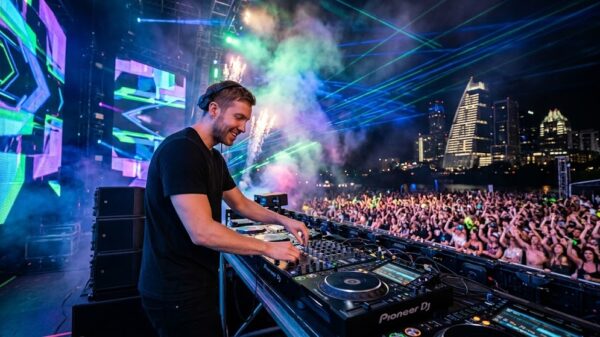
The track went on to receive a Grammy nomination for Best Dance Recording — a recognition that underscored how seriously the music industry took Robinson’s artistic pivot. It also became the centerpiece of Virtual Self live shows, which were staged as full-scale raves with custom visuals, laser rigs, and production design that drew directly from the 90s rave aesthetic Robinson was channeling.
For fans who had followed Robinson from his early electro-house days through Worlds and into Virtual Self, “Ghost Voices” represented an artist willing to continually reinvent himself rather than repeat what had already worked. It remains one of the most acclaimed electronic tracks of the late 2010s.
Related: What We Know About Porter Robinson’s Alias Virtual Self