
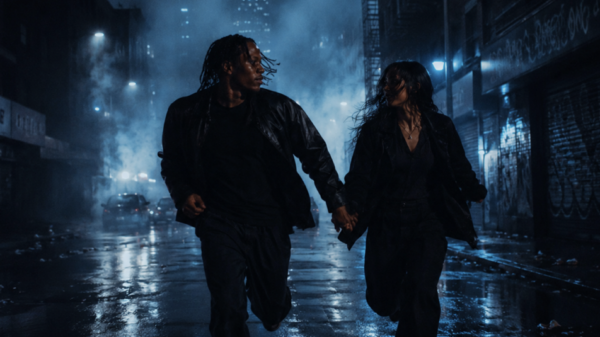


Picture this: You're walking through an actual forest in rural Michigan at 2 a.m. The trees are lit up with thousands of LED lights that pulse and change colors to the music. A 40-foot tall metal sculpture shoots flames into the sky. A woman in a full fairy costume walks past you on stilts. Someone hands you a glowstick and asks if you “want to see something magical” before leading you to a hidden stage where a DJ you've never heard of is playing to 50 people dancing their faces off.
You turn a corner and find an interactive art installation—a giant telephone booth in the middle of the forest. You pick up the phone. Someone answers. They're in a completely different part of the festival. You have a conversation with a stranger through forest telephones.
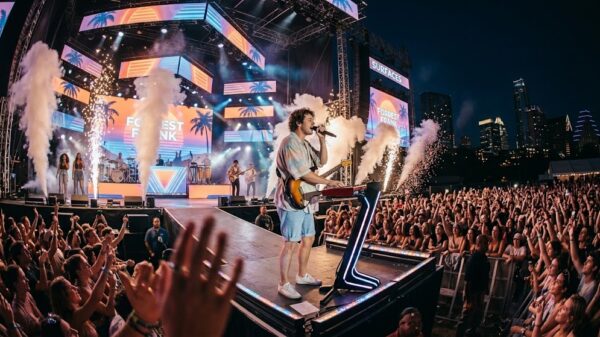
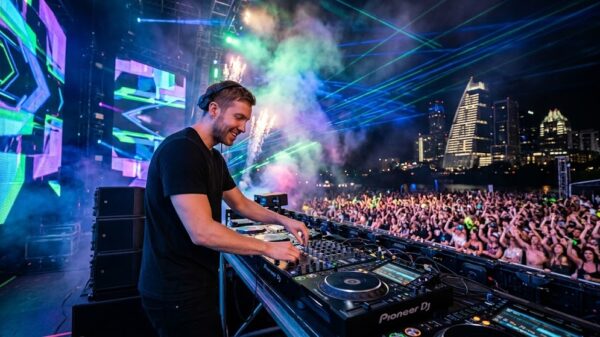
Behind you, 40,000 people are watching a jam band from Colorado perform a four-hour set complete with aerial dancers, fireworks, confetti cannons, and laser shows that turn the entire sky green.
This is Electric Forest.
It's not Coachella. It's not EDC. It's not Bonnaroo. Electric Forest is its own thing entirely—a four-day camping festival held in the woods of western Michigan that somehow blends EDM, jam bands, art installations borrowed from Burning Man, and a community culture so devoted that people literally tattoo the festival's logo on their bodies.
Also Read: Golf Sims Near You
40,000-50,000 people descend on the tiny town of Rothbury, Michigan (population: 437) every June for Electric Forest. They camp in the woods. They dance until sunrise. They wander through Sherwood Forest—an actual wooded area transformed into an LED-lit, art-filled wonderland that looks like something out of Alice in Wonderland.
The festival sells out every single year—and has since 2014. Tickets go on sale and disappear within hours. People plan their entire summer around it. Some attendees haven't missed a year since 2011. They call themselves the “Forest Family.”
And if you mention Electric Forest to anyone who's been, they'll get this look in their eyes—a mix of nostalgia, excitement, and slight disbelief—and say something like: “You just have to experience it. I can't explain it.”
But here's the uncomfortable truth about Electric Forest: It's also Ground Zero for wook culture. It's where trust fund hippies and actual homeless festival nomads collide. It's where people eat mystery drugs they found on the ground and call it “groundscoring.” It's where your campsite will get invaded by strangers who help themselves to your food and act like you're the asshole for wanting them to leave.
Electric Forest is simultaneously one of the most beautiful, creative, and magical music festivals in America AND one of the weirdest, wookiest, most chaotic camping experiences you'll ever have.
So what exactly is Electric Forest? How did a music festival in rural Michigan become a cultural phenomenon? And why do tens of thousands of people keep coming back year after year?
Let's dive into the forest.
The Origin Story: From Rothbury to Electric Forest
Electric Forest didn't start as Electric Forest. It started as Rothbury Festival in 2008.
Rothbury was created as a multi-genre music festival on the grounds of the Double JJ Resort in Rothbury, Michigan—a 2,000-acre property that includes camping grounds, a water park, a lake, and most importantly, a natural wooded area called Sherwood Forest.
The first Rothbury Festival in 2008 drew about 30,000 people and featured a diverse lineup: Bob Dylan, Snoop Dogg, John Mayer (with Jennifer Aniston watching from side-stage), 311, Colbie Caillat, and a Colorado jam band called The String Cheese Incident.
The festival was successful, but 2009 brought financial troubles. Ownership disputes, bankruptcy proceedings, and uncertainty about whether the festival would continue plagued the event. Rothbury 2009 happened, but barely. In 2010, the festival went on hiatus.
Then in 2011, two companies stepped in: Insomniac (the production company behind EDC and other massive EDM festivals, run by CEO Pasquale Rotella) and Madison House Presents (a Colorado-based promoter that worked with jam bands).
They rebranded the festival as Electric Forest—shifting the focus toward electronic music while keeping the jam band roots—and made The String Cheese Incident the host band. String Cheese would perform three sets every year (more than any other artist) and help curate the lineup, art, and overall experience.
The name “Electric Forest” was perfect. It captured both sides of the festival: electric (EDM, bass music, house, techno) and forest (jam bands, organic vibes, nature, art).
The inaugural Electric Forest in 2011 featured Tiësto, Pretty Lights, and String Cheese as headliners. It set the template for what the festival would become: a blend of top-tier electronic artists, live jam bands, and an immersive forest experience unlike anything else in the U.S.
Since 2011, Electric Forest has grown from a regional festival into a national pilgrimage. People fly in from across the country. International attendees come from Europe, Australia, South America. The festival sells out every year.
In 2017, Electric Forest expanded to two weekends to accommodate demand. That experiment lasted until 2019—two weekends meant double the wear and tear on the grounds, missing reunions with friends who chose opposite weekends, and logistical nightmares. In 2019, they went back to one weekend.
In 2020-2021, the festival was canceled due to COVID. In 2022, it returned triumphantly. In 2024, the Village of Rothbury approved an extension of the festival's permit through 2035.
Electric Forest isn't going anywhere. And for the Forest Family, that's exactly what they want.
The Location: Rothbury, Michigan (Population: 437)
Rothbury is not a city. It's barely a town. It's a tiny village in Oceana County, Michigan, about an hour northwest of Grand Rapids and nine miles from Lake Michigan.
Population: 437 people.
For 361 days of the year, Rothbury is a quiet, rural community. Then for four days in June, 40,000-50,000 people invade.
The festival takes place at the Double JJ Resort, a 2,000-acre property (roughly 1,500 football fields) that includes:
- Massive campgrounds
- Sherwood Forest (the wooded area that gives the festival its magic)
- A water park (open to festival attendees)
- A lake
- Multiple stages spread across fields and forests
- Art installations, hidden venues, secret stages
The festival grounds are sprawling. You can walk for 20 minutes and still be on the property. Some people bring bikes. Many rent golf carts (if they're VIP). Most just walk—a lot.
The forest itself is the star. Unlike flat, open-field festivals (Coachella, Lollapalooza), Electric Forest uses natural terrain. You're camping in actual woods. You're wandering through trees. The stages are nestled into clearings. The vibe is immersive in a way that concrete festival grounds can never replicate.
But here's the trade-off: Rural Michigan in June means bugs, humidity, potential rain, and limited infrastructure. Cell service is terrible. The nearest real town is miles away. If you forget something important, you're screwed unless you packed it.
And the town of Rothbury? It's overwhelmed. Traffic on Friday arrival and Sunday exit is a nightmare. Local roads aren't designed for 50,000 people driving in at once. The village collects fees from ticket sales to improve infrastructure, but it's still a mess every year.
Economic impact: Local businesses love it. Hotels, restaurants, gas stations, and vendors see massive revenue spikes. But residents? Mixed feelings. Some love the annual economic boost. Others hate the traffic, noise, and chaos.
The Music: EDM Meets Jam Bands (An Unlikely Marriage That Works)
Electric Forest has one of the most eclectic lineups in the U.S. festival scene. It's not just EDM. It's not just jam bands. It's both—plus house, techno, funk, soul, indie, hip-hop, and experimental bass.
The Headliners (What You'll See)
2025 Lineup Highlights:
- Justice (French electronic duo, massive live show)
- FISHER (house music party-starter)
- Disclosure (UK garage/house legends, DJ set)
- Tiësto (EDM legend, career-spanning set)
- Khruangbin (psychedelic funk trio, perfect for sunset)
- Louis The Child (feel-good electronic)
- Zeds Dead (bass music heavyweights)
- Liquid Stranger (experimental bass)
- The String Cheese Incident (two performances, including the legendary Saturday night “Shebang”)
The String Cheese Incident: The Heart of the Forest
String Cheese isn't just another band on the lineup. They're the host band—the spiritual center of Electric Forest.
From 2011-2016, String Cheese performed three sets every year (more than any other act). Now they typically perform two sets, with the Saturday night set being the main event: The Shebang (also called “The Spectacle”).
The Shebang is a four-hour extravaganza that includes:
- Two hours of music
- Short intermission
- Two more hours of music with:
- Aerial dancers suspended on hoops above the crowd
- Fireworks launched from multiple locations (stage, behind trees, overhead)
- Laser shows that turn the entire sky green
- Confetti cannons
- Giant LED beach balls tossed into the crowd
- Covers of Pink Floyd, Grateful Dead, and more
- Musical guests and collaborations
The Shebang is the can't-miss event of the weekend. For many people, it's the main reason they come to Electric Forest.
String Cheese's connection to the festival goes deeper than just performing. Members of the band—particularly violinist/mandolinist Michael Kang—have connections to Burning Man and brought many of the art installations and artists to Electric Forest. The band helps curate the experience, not just the music.
The Stages (Seven Main Stages + Secret Venues)
Ranch Arena: Main stage. Massive. Video screens, fireworks, the works. This is where headliners perform.
Sherwood Court: Nestled at the edge of the forest. Stunning light displays, perfect for sunset sets.
Tripolee: The bass music stage. Lasers, LED screens, heavy dubstep and riddim. This is where bassheads live.
Jubilee: Mid-sized stage for diverse acts.
The Observatory: Smaller stage with bleacher seating, intimate vibe.
The Honeycomb: Hidden stage deep in the forest. Secret sets happen here. You might stumble upon an unannounced artist at 3 a.m.
Silent Disco: Headphone parties where everyone dances to different DJs on different channels.
Plus: Random small stages tucked into the forest, pop-up performances, roaming artists, surprise collaborations.
You need a schedule (or the app) to plan your must-see sets, but half the fun is wandering and discovering music you didn't know existed.
The Sherwood Forest: Where the Magic Actually Happens
The Sherwood Forest is what makes Electric Forest different from every other festival.
It's an actual wooded area on the Double JJ Resort property that's been transformed into an LED-lit, art-filled, interactive wonderland. By day, it's a shaded escape from the sun—hammocks strung between trees, chill zones, hidden pathways. By night, it's a psychedelic dreamscape.
What's in the Forest:
LED-lit trees: Thousands of LED lights wrap around trees, pulsing and changing colors to the music. The entire forest glows.
Art installations: Massive sculptures, some borrowed from Burning Man artists. Metal structures that shoot flames. Interactive pieces where you can climb, touch, explore.
Hidden stages: Small performance spaces tucked into clearings. You might turn a corner and find 50 people watching an acoustic set or a DJ playing deep house.
Interactive experiences:
- Telephone booths where you can call other parts of the festival
- Doors that open to reveal surprises
- Mirrors, tunnels, optical illusions
- Actors and performers in costume (fairies, creatures, characters)
Secret venues: The Honeycomb, The Grand Artique, Miss Brown's Tea House Saloon (Wild West themed), Carousel Club—themed spaces with bars, performances, and hidden gems.
The Forest Philosophy:
The unofficial motto: “If you see something weird, go toward it.”
Festival veterans advise:
- Put your phone away and slow down
- If you see a telephone, pick it up
- If you see a door, try opening it
- Talk to the performers and actors—they'll guide you to hidden experiences
- Be playful, curious, childlike
- Don't rush from set to set—wander, explore, discover
The Forest is designed for synchronicity and serendipity. You're supposed to get lost. You're supposed to stumble into magical moments you didn't plan for.
The Culture: Forest Family, Wooks, and Everything In Between
Electric Forest has a devoted community culture that calls itself the “Forest Family.”
The good parts:
- Genuine kindness and openness
- “PLUR” vibes (Peace, Love, Unity, Respect—rave culture motto)
- Sharing resources, helping strangers, looking out for each other
- Emotional connections—people meet lifelong friends at Electric Forest
- Tattoos of the Electric Forest logo (seriously, thousands of people have them)
- Annual reunions—groups of friends return every year and camp together
The uncomfortable parts:
- It's also wook central (see the wook article)
- Groundscoring (finding drugs on the ground and taking them—extremely dangerous)
- Mooching culture (strangers inviting themselves to your campsite)
- Theft (don't leave valuables unattended)
- Hygiene issues (festival showers exist, but not everyone uses them)
- Entitlement (the “festival family” excuse for boundary violations)
Electric Forest attracts both ends of the spectrum: trust fund kids who can afford $1,130 VIP tickets AND homeless festival nomads who hitchhiked from three states away and are surviving on goodwill.
The mix creates a chaotic, beautiful, frustrating, magical environment where you might have a profound conversation with a stranger about the meaning of life at 4 a.m., then wake up to find that same stranger ate all your snacks.
The Ticket Tiers: GA vs. Good Life (VIP)
General Admission (GA): ~$600
- 4-day festival access
- Campground access
- You camp in regular campgrounds (which can get crowded)
- Walk to stages (can be 20+ minute walks)
- Standard porta-potties
Good Life (VIP): ~$1,130
- Everything in GA, plus:
- Closer camping to stages
- Exclusive entrances (skip some lines)
- Premium viewing areas at stages
- Golf cart shuttle access
- Better bathrooms (actual trailers with running water)
- VIP bars and lounges
- Curated experiences
Back 40 (Ultra-VIP): Pool parties, private sets, catering, golf cart transportation, lake access, basically glamping.
The price jump from GA to Good Life is steep ($530 more), but for people who've done GA and gotten tired of the 20-minute walks and porta-potty lines, it's worth it.
Payment plans: You can buy tickets with $50 down and pay over time.
Resale: Tickets sell out fast (within hours of going on sale in December). If you miss the initial sale, you're stuck with AXS Official Resale or hoping someone you know can't go.
What Makes Electric Forest Different from Other Festivals
1. The Forest itself: Most festivals are held in parking lots, fields, or fairgrounds. Electric Forest is held in an actual forest that's been turned into an art installation. You can't replicate that anywhere else.
2. The art: Burning Man-level installations brought to a music festival. Some sculptures you'll only see at Burning Man or Electric Forest—nowhere else.
3. The community: The Forest Family is real. People return year after year. It's not just a festival—it's a reunion.
4. The blend of genres: EDM + jam bands shouldn't work, but it does. Where else can you see Tiësto and The String Cheese Incident on the same lineup?
5. The Shebang: No other festival has a four-hour spectacle set with aerial dancers, fireworks, and lasers that turns Saturday night into a legendary event.
6. The hidden experiences: Secret stages, surprise sets, interactive art, telephone booths, hidden doors—Electric Forest rewards exploration in a way most festivals don't.
7. The longevity commitment: The festival just secured permits through 2035. It's not going anywhere.
The Downsides (Brutally Honest Edition)
1. It's in rural Michigan. Cell service is terrible. Infrastructure is limited. If something goes wrong, you're far from civilization.
2. The weather is unpredictable. June in Michigan can be hot and humid, rainy and muddy, or perfect. You won't know until you get there.
3. The bugs. Mosquitoes, ticks, flies—you're camping in the woods. Bring bug spray or suffer.
4. Wooks. Everywhere. Electric Forest is wook Mecca. If you hate wook culture, this festival will test you.
5. The walk. Even in Good Life, you're walking a lot. Bring comfortable shoes or your feet will hate you.
6. The traffic. Friday arrival and Sunday exit are nightmares. Plan for hours of sitting in traffic.
7. It sells out instantly. If you hesitate when tickets go on sale, you miss out.
The Verdict: Is Electric Forest Worth It?
If you love:
- EDM and jam bands
- Camping festivals
- Art installations and interactive experiences
- Festival communities
- Exploring and discovering hidden gems
- Bass music, house, techno, funk, all of it
- The idea of wandering through a glowing forest at 3 a.m. and stumbling into magic
Then yes. Electric Forest is absolutely worth it.
If you hate:
- Camping
- Wooks
- Rural locations with limited infrastructure
- Long walks
- Crowds
- Unpredictable weather
- Bugs
Then maybe skip it.
Electric Forest is polarizing. People either love it obsessively (hence the Forest Family tattoos) or hate it and never return.
But for the 40,000-50,000 people who show up every June, Electric Forest is home. It's a four-day escape from reality into a world where trees glow, music never stops, art is everywhere, and anything is possible.
Is it weird? Absolutely.
Is it chaotic? Yes.
Is it magical? Undeniably.
And that's exactly why people keep coming back.
Welcome to the Forest. You just have to experience it.