
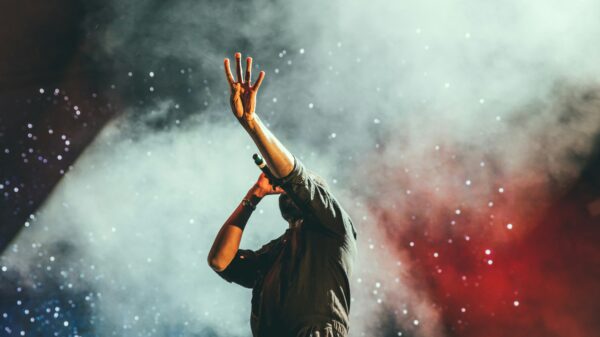


You're in a club at 2 AM.
The bass is pounding. The kick drum hits on every beat—thump, thump, thump, thump—like a heartbeat you can feel in your chest. A soulful vocal sample loops over and over. The hi-hats shimmer. The bassline rolls.
Everyone around you is moving in unison, hypnotized by the groove.
Someone next to you shouts over the music: “This track is amazing! What is this?”
You shout back: “It's house!”
But what does that actually mean?
House music is everywhere—in clubs, at festivals, on the radio, in commercials, in video games. It's been the foundation of electronic dance music for over 40 years. Artists like Daft Punk, Disclosure, Calvin Harris, and The Chemical Brothers all build on house music's blueprint.
Yet most people couldn't tell you what house music actually is.
They know it when they hear it. They dance to it. But ask them to define it? Silence.
This guide will explain everything you need to know about house music:
- What house music is (and what makes it different from other EDM)
- Where it came from (Chicago, 1980s, the Warehouse nightclub)
- The essential elements that define the sound
- The major subgenres (deep house, tech house, progressive, and more)
- Why house music changed club culture forever
- How to recognize house when you hear it
Because house music isn't just a genre. It's the foundation of modern dance music. It's where electronic music began its journey from underground clubs to global phenomenon.
Let's go back to where it all started.
What Is House Music?
House music is a genre of electronic dance music created in Chicago in the early 1980s, characterized by a steady four-on-the-floor beat (kick drum on every quarter note), typically around 120-130 BPM, with influences from disco, soul, funk, and early electronic music.
The basic formula:
- Four-on-the-floor kick drum – boom-boom-boom-boom on every beat
- Tempo: 120-130 BPM – Fast enough to dance, slow enough to groove
- Repetitive structure – Loops and patterns that build and evolve
- Soulful elements – Vocal samples, disco strings, funk basslines
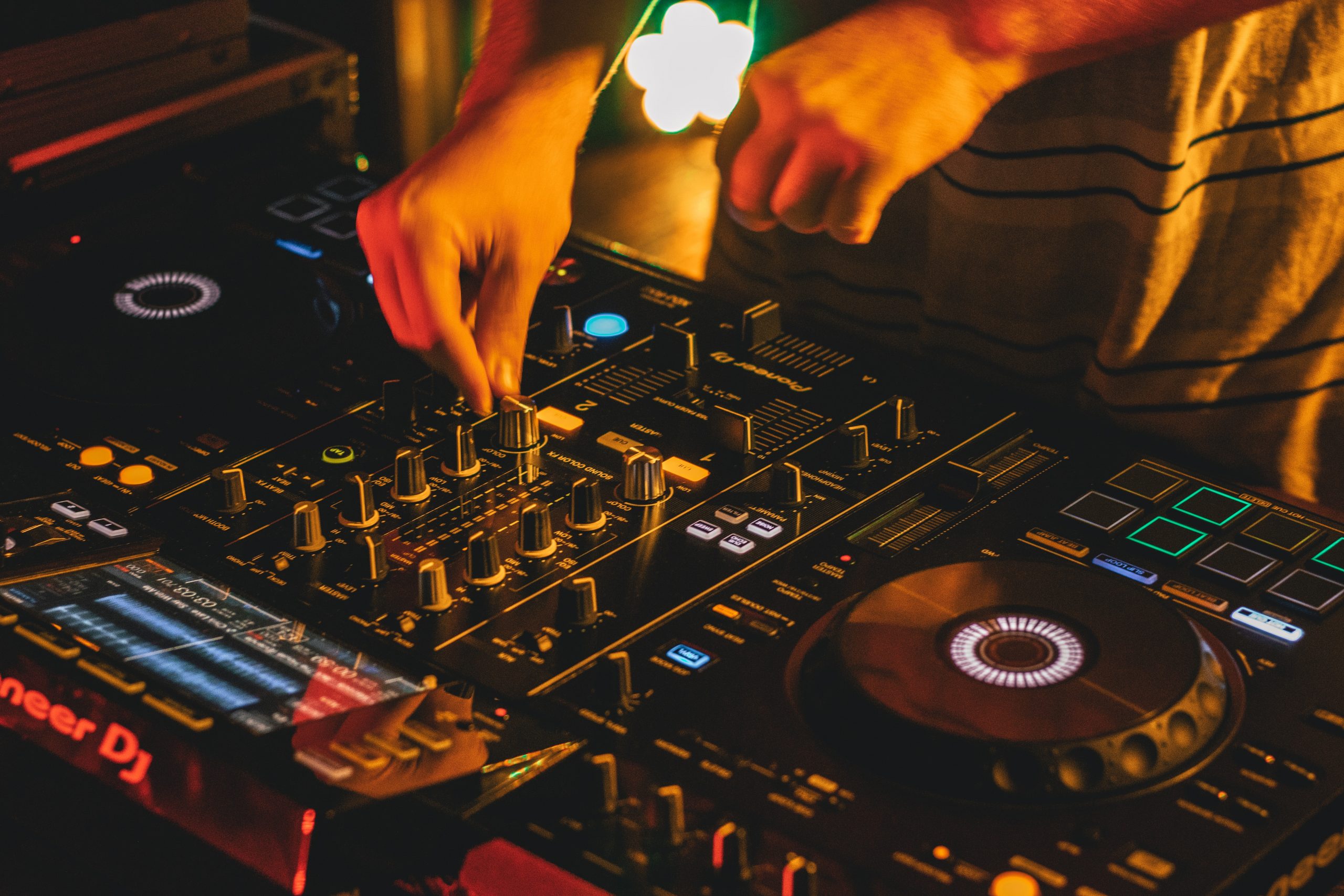
- Electronic production – Drum machines, synthesizers, samplers
But house music is more than just technical specifications.
It's a feeling. A vibe. A culture born from Chicago's underground Black and gay club scene in the early 1980s, where DJs like Frankie Knuckles took disco records, extended them with drum machines and tape edits, and created something entirely new.
The name “house” comes from the Warehouse, a Chicago nightclub where DJ Frankie Knuckles played in the late 1970s and early 1980s. Regular clubbers would ask record stores for “the music they play at the Warehouse”—which eventually got shortened to “house music.”
By the mid-1980s, house music had:
- Exploded across Chicago's South and West Sides
- Spread to Detroit (where it influenced techno)
- Jumped to New York City
- Crossed the Atlantic to the UK
- Evolved into dozens of subgenres
- Become the foundation for nearly all modern electronic dance music
Today, when you hear EDM at festivals, progressive house on the radio, or deep house in upscale cocktail bars, you're hearing house music's DNA.
The Birth of House Music: Chicago, 1977-1987
To understand house music, you need to understand where it came from.
The Warehouse and Frankie Knuckles
1977: The Warehouse nightclub opens in Chicago, located in a former industrial building on Jefferson Street. The club caters primarily to Black and gay audiences—communities often excluded from mainstream clubs.
The resident DJ: Frankie Knuckles, a New York transplant who'd learned his craft at legendary clubs like the Continental Baths alongside Larry Levan.
Knuckles' innovation:
Instead of just playing disco records as they were, he:
- Extended tracks by mixing between two copies of the same record
- Added drum machine patterns (Roland TR-808, TR-909) over songs
- Used a reel-to-reel tape machine to edit and loop breaks
- Layered in synthesizer basslines and effects
- Created seamless blends between tracks that kept people dancing for hours
This wasn't just DJing. This was production happening live in real-time.
Regular Warehouse attendees started asking local record shops for “that music Frankie plays at the Warehouse.” Store clerks shortened it to “house music,” and the name stuck.
The Producers: Creating the Sound
While Frankie Knuckles was the godfather, others were pushing house music forward:
Jesse Saunders – “On and On” (1984) Widely considered the first house music record ever pressed, “On and On” was created with minimal equipment—a Roland TR-808 drum machine, a Korg synthesizer, and determination.
The track is primitive by today's standards: simple drum pattern, basic bassline, minimal vocals. But it established the template: four-on-the-floor kick, electronic production, repetitive structure designed for DJs.
Chip E. – “It's House” (1985) A track that literally declared its own genre. The vocal samples repeat “It's house” throughout, cementing the term.
Marshall Jefferson – “Move Your Body” (1986) Also known as “The House Music Anthem,” this track defined what house music could be: piano-driven, soulful, uplifting, with gospel influences and that relentless four-on-the-floor groove.
The piano house template that Jefferson created would influence countless producers for decades.
Farley “Jackmaster” Funk – “Love Can't Turn Around” (1986) The first house track to cross over to mainstream radio and UK charts, proving house music had commercial potential beyond Chicago clubs.
Mr. Fingers (Larry Heard) – “Can You Feel It” (1986) One of the most influential house tracks ever made. Larry Heard's production was deeper, more atmospheric, more emotional than the raw, energetic tracks coming from other producers.
This track essentially invented deep house—a more melodic, soulful, jazz-influenced variation that prioritizes vibe over energy.
The Record Stores and Labels
Importes Etc. – Record store that became the hub of Chicago house culture. Producers would bring in tracks, DJs would buy them, and trends would spread.
Trax Records – Founded in 1984, released many of the early house classics including tracks by Jesse Saunders, Marshall Jefferson, and Frankie Knuckles.
DJ International – Another crucial label that released Farley Jackmaster Funk, Steve “Silk” Hurley, and Fast Eddie.
These tiny independent labels were pressing 500-1,000 copies of 12-inch vinyl records and distributing them almost exclusively to Chicago DJs and record stores. No major label support. No radio play (initially). Just pure underground club music.
The Essential Elements of House Music
What makes house music sound like house music?
1. Four-on-the-Floor Kick Drum
The defining characteristic: a kick drum (bass drum) hits on every quarter note.
Count it out: 1-2-3-4, 1-2-3-4, 1-2-3-4
Boom-boom-boom-boom, boom-boom-boom-boom
This creates an unwavering, hypnotic pulse that's easy to dance to. Unlike funk or hip-hop (which have syncopated, complex rhythms), house music's kick pattern is relentlessly consistent.
This came from disco, which popularized four-on-the-floor drumming in the 1970s. House music took disco's foundation and stripped it down to its essential groove.
2. Tempo: 120-130 BPM
House music sits in a specific tempo range:
Classic house: 120-125 BPM
Modern house: 125-130 BPM
Deep house: 115-125 BPM (slightly slower, more groovy)
Tech house: 125-130 BPM (driving energy)
Why this matters: This tempo is fast enough to keep energy high but slow enough to maintain a groove. Compare to:
- Disco: 110-130 BPM (house's parent genre)
- Techno: 125-135 BPM (slightly faster, more mechanical)
- Drum & bass: 160-180 BPM (much faster)
- Dubstep: 140 BPM (half-time feel, so feels like 70 BPM)
House music's tempo hits the sweet spot where you can dance for hours without exhaustion.
3. Hi-Hat Patterns
The hi-hats (or open hi-hats) create the “tss-tss-tss-tss” sound that drives the track forward.
Typical pattern: Open hi-hats on the off-beats (the “and” between beats)
1-AND-2-AND-3-AND-4-AND
Where the kick hits on the numbers, the hi-hat hits on the “AND.”
This creates the shuffle, the swing, the groove that makes house music danceable rather than robotic.
4. Basslines
House music basslines are typically:
- Synthesized (not live bass guitar, though samples used sometimes)
- Repetitive (loops that groove)
- Syncopated (dance around the beat rather than hit it directly)
- Funky (influenced by disco and funk)
The bassline and kick drum work together to create the low-end groove that you feel in your chest on a club sound system.
5. Vocal Samples and Soul Influence
House music borrows heavily from disco and soul:
- Vocal samples from classic records
- Diva vocals (high-pitched, emotional singing)
- Gospel influences (call-and-response, uplifting messages)
- Spoken word samples
- Chopped and looped vocal phrases
Classic examples:
- “Can you feel it?” (repeated phrase in countless tracks)
- “Music is the answer”
- “Love is the message”
- Soul diva acapellas stretched over electronic beats
This soul influence distinguishes house from techno (which is typically colder, more mechanical, less vocal-focused).
6. Repetition and Build
House music is built on repetition:
- 16-bar loops
- 32-bar sections
- Gradual addition of elements
- Breakdowns where elements drop out
- Builds where tension increases
- Drops where everything comes back
The structure creates a journey rather than a traditional verse-chorus-verse song. House tracks are designed for DJs to mix, so they need long intros, outros, and sections that blend seamlessly.
7. The Drum Machines
Early house producers couldn't afford live drummers or expensive studios.
They used affordable drum machines:
Roland TR-808 – Produced the deep, booming kick and crisp hi-hats Roland TR-909 – Sharper, more aggressive sound Roland TR-707 – Another popular choice
These machines gave house music its electronic character. The sounds are artificial, synthetic, mechanical—but that's the point. House music embraced the machines rather than trying to hide them.
How House Music Spread Beyond Chicago
New York City
House music hit New York in the mid-1980s, finding a home in clubs like Paradise Garage (Larry Levan), Zanzibar (Tony Humphries), and the Sound Factory.
New York house developed its own flavor:
- More polished production
- Stronger gospel and R&B influences
- “Garage house” style (named after Paradise Garage)
- Vocal-driven tracks
Key New York producers: Masters at Work (Louie Vega and Kenny Dope), Todd Terry, Kerri Chandler
Detroit
Detroit took house music and made it darker, more mechanical, more futuristic—creating techno.
The Belleville Three (Juan Atkins, Derrick May, Kevin Saunderson) were influenced by Chicago house but added:
- European electronic music influences (Kraftwerk)
- Sci-fi and futuristic themes
- Less soul, more machine
- Faster tempos
Techno is house music's colder, more industrial cousin.
United Kingdom
1987: House music explodes in the UK, coinciding with the Second Summer of Love and the rave scene.
Key moments:
- M/A/R/R/S – “Pump Up the Volume” (1987) brings house to UK charts
- Acid house raves in warehouses and fields
- Ibiza becomes the house music capital
- UK producers create their own styles (UK garage, speed garage)
The UK embraced house music completely, making it mainstream in a way America hadn't (yet). By 1988-89, house tracks were topping UK pop charts.
Europe
House music spread across Europe in the late 1980s and early 1990s:
Ibiza, Spain – Became the summer house music pilgrimage destination
Netherlands – Developed Dutch house (later big room house)
Germany – Integrated house into their existing electronic music scene
France – French house emerges in the 1990s (Daft Punk, Cassius, Stardust)
Major House Music Subgenres
House music evolved into dozens of subgenres. Here are the main ones:
Deep House
Sound: Smooth, soulful, jazz-influenced, atmospheric
Tempo: 115-125 BPM (slower than standard house)
Vibe: Laid-back, sophisticated, emotional
Key characteristics:
- Complex chord progressions
- Jazz and soul influences
- Warm, organic sounds mixed with electronics
- Less aggressive than other house styles
Pioneers: Larry Heard (Mr. Fingers), Kerri Chandler, Moodymann
Modern artists: Disclosure, Duke Dumont, Hot Since 82
Where you hear it: Upscale lounges, beach clubs, Ibiza sunset sessions
Tech House
Sound: Fusion of house's groove with techno's mechanical elements
Tempo: 125-130 BPM
Vibe: Underground, minimal, hypnotic
Key characteristics:
- Stripped-down, minimal production
- Emphasis on rhythm and groove over melody
- Dark, driving basslines
- Influenced by Detroit techno
Pioneers: Green Velvet, Carl Cox, Jamie Jones
Modern artists: Fisher, Chris Lake, John Summit
Where you hear it: Underground clubs, Ibiza, techno-focused festivals
Progressive House
Sound: Melodic, emotional, building, anthem-like
Tempo: 125-130 BPM
Vibe: Uplifting, euphoric, festival-ready
Key characteristics:
- Long builds and breakdowns
- Emotional melodic hooks
- Big room sound (especially modern progressive)
- Influences from trance
Pioneers: Sasha, John Digweed, Eric Prydz
Modern artists: Deadmau5, Eric Prydz, Above & Beyond (progressive trance)
Where you hear it: EDM festivals, mainstages, large venues
Acid House
Sound: Squelchy, psychedelic, hypnotic
Tempo: 120-130 BPM
Vibe: Trippy, intense, raw
Key characteristics:
- Roland TB-303 bassline creating the signature “acid” squelch
- Repetitive, hypnotic patterns
- Minimal vocals
- Associated with late-80s UK rave culture
Pioneers: Phuture (“Acid Tracks”), 808 State, A Guy Called Gerald
Where you hear it: Underground raves, retro nights, experimental sets
Chicago House / Classic House
The original style from 1980s Chicago.
Sound: Raw, soulful, energetic
Tempo: 120-125 BPM
Vibe: Pure club energy
Pioneers: Frankie Knuckles, Marshall Jefferson, Jesse Saunders
This is the blueprint all other house styles evolved from.
Garage House / UK Garage
Sound: Skippy, syncopated, R&B-influenced
Tempo: 130-135 BPM (UK garage often faster)
Vibe: Groovy, sexy, vocal-driven
Key characteristics:
- Syncopated rhythms (not straight four-on-the-floor)
- Heavy R&B and soul vocal samples
- Shuffled beats
Pioneers: Masters at Work, Todd Terry (US garage), MJ Cole (UK garage)
UK garage eventually evolved into dubstep and grime.
Electro House
Sound: Heavy, aggressive, festival-ready
Tempo: 125-130 BPM
Vibe: High-energy, mainstream EDM
Key characteristics:
- Heavy basslines and synth leads
- Big drops
- Influenced by electro and Dutch house
- Commercial appeal
Artists: Deadmau5, Wolfgang Gartner, Knife Party, Zedd
Peak era: 2008-2014 (the EDM boom)
Where you hear it: EDM festivals, commercial clubs, radio
French House / Filter House
Sound: Funky, disco-influenced, filtered
Tempo: 115-130 BPM
Vibe: Groovy, retro-futuristic, stylish
Key characteristics:
- Heavy use of filters (sweeping the frequency cutoff)
- Disco and funk samples
- Repetitive, hypnotic grooves
- Less vocal-focused than other styles
Pioneers: Daft Punk, Stardust, Cassius, Modjo
Classic tracks: Daft Punk – “Around the World,” Stardust – “Music Sounds Better With You”
Iconic House Music Tracks You Need to Know
These tracks defined house music:
“Your Love” – Frankie Knuckles & Jamie Principle (1987) The track that defined what house music could be emotionally.
“Move Your Body (The House Music Anthem)” – Marshall Jefferson (1986) Piano house perfection. Still sounds fresh today.
“Can You Feel It” – Mr. Fingers (1986) Deep house blueprint. Atmospheric, emotional, timeless.
“French Kiss” – Lil Louis (1989) Orgasmic vocal samples over a hypnotic groove. Controversial and legendary.
“Show Me Love” – Robin S. (1992) Gospel vocals meet house beats. Massive crossover hit.
“Finally” – CeCe Peniston (1991) Diva vocals, piano house, pure euphoria.
“Music Sounds Better With You” – Stardust (1998) French house classic. Filtered disco sample, hypnotic groove.
“Around the World” – Daft Punk (1997) French house meets robotic perfection.
“Professional Widow (Armand Van Helden Remix)” – Tori Amos (1996) Speed garage remix that became bigger than the original.
“One More Time” – Daft Punk (2000) Filter house anthem that brought house to the mainstream.
“Latch” – Disclosure ft. Sam Smith (2012) UK garage-influenced deep house that dominated charts.
“Animals” – Martin Garrix (2013) Big room house that defined the EDM era (love it or hate it).
How to Recognize House Music When You Hear It
Ask yourself these questions:
✅ Is there a consistent kick drum on every beat? (Four-on-the-floor)
✅ Is the tempo around 120-130 BPM? (Fast walking pace)
✅ Are the hi-hats prominent and driving?
✅ Does it have a repetitive, hypnotic structure?
✅ Is there a funky or soulful element? (Vocals, bassline, disco influence)
✅ Does it make you want to dance?
If yes to most of these, it's probably house music.
Still not sure? Compare to:
Techno – Colder, more mechanical, fewer vocals, darker vibe
Trance – Higher BPM (130-140), more melodic, epic breakdowns
Dubstep – Half-time drums (140 BPM but feels like 70), wobble bass
Drum & Bass – Much faster (160-180 BPM), breakbeats not four-on-the-floor
Why House Music Matters
House music isn't just a genre—it's a cultural movement.
It Created Safe Spaces
House music's origins in Chicago's Black and gay club scene meant it was inherently inclusive and liberating. At a time when LGBTQ+ people faced discrimination, house clubs provided sanctuary.
The music reflected liberation:
- Freedom to dance
- Freedom to express
- Freedom to love
- Freedom to be yourself
“House is a feeling” became a mantra because it represented something bigger than music.
It Democratized Music Production
Before house music, making music required:
- Expensive studio time
- Live musicians
- Record label backing
- Professional training
House producers proved you could make music with:
- A drum machine
- A synthesizer
- Passion and creativity
- No formal training needed
This DIY ethos influenced every electronic genre that followed and eventually led to bedroom producers becoming global stars.
It Changed Club Culture Forever
House music introduced:
- All-night dancing (8+ hour sets)
- DJ as star (not just background music)
- Electronic production in clubs
- Repetitive, hypnotic music designed for dancing (not radio hits)
Before house music, DJs played records. After house music, DJs became producers, artists, and cultural icons.
It Launched EDM
Nearly every modern electronic dance music genre traces back to house:
House → Techno
House → Trance
House → UK Garage → Dubstep
House → Drum & Bass (indirectly)
House → Big Room House → Festival EDM
Without house music, there's no Deadmau5, no Daft Punk, no Calvin Harris, no Swedish House Mafia, no EDC, no Tomorrowland.
Frequently Asked Questions
What's the difference between house and techno?
House music is soulful, funky, and often vocal-driven, originating in Chicago in the early 1980s. Techno is colder, more mechanical, and futuristic, originating in Detroit in the mid-1980s. House emphasizes groove and soul; techno emphasizes minimalism and machine-like precision. Both share four-on-the-floor beats but have different vibes.
Who invented house music?
Frankie Knuckles is called the “Godfather of House Music” for pioneering the sound at Chicago's Warehouse nightclub. However, house music was a collective creation involving DJs and producers like Jesse Saunders, Marshall Jefferson, Larry Heard, and Chip E. in early-to-mid 1980s Chicago.
What BPM is house music?
House music typically ranges from 120-130 BPM. Classic house sits around 120-125 BPM, while modern and tech house often runs 125-130 BPM. Deep house is slightly slower at 115-125 BPM. This tempo is fast enough for energetic dancing but maintains a groove.
Why is it called house music?
The name comes from the Warehouse, a Chicago nightclub where DJ Frankie Knuckles played in the late 1970s and early 1980s. Clubgoers would request “that music they play at the Warehouse” at record stores, which got shortened to “house music.”
What makes house music different from EDM?
House music is a specific genre within EDM (Electronic Dance Music), which is an umbrella term. House has four-on-the-floor beats, 120-130 BPM tempo, and soulful influences. EDM as marketed today often refers to big room house, progressive house, and festival-oriented electronic music—which are actually subgenres of house.
Is house music still popular?
Yes, house music remains one of the most popular dance music genres globally. Deep house dominates Ibiza and upscale clubs, tech house rules underground scenes, and progressive house fills festival mainstages. Artists like Calvin Harris, Disclosure, and Duke Dumont regularly top charts with house-influenced tracks.
What equipment do you need to make house music?
At minimum: a computer with a DAW (Digital Audio Workstation) like Ableton Live or FL Studio, drum machine samples or plugins (emulating Roland TR-808/909), and a MIDI keyboard. Early house producers used hardware drum machines and synthesizers, but modern production is primarily software-based.
The Bottom Line: House Music Is the Foundation
House music is where modern dance music begins.
It's the four-on-the-floor kick that makes you move. It's the soulful vocals that give you chills. It's the hypnotic groove that keeps you dancing until sunrise. It's the feeling of community on a packed dancefloor.
Born in Chicago's Black and gay underground clubs in the early 1980s, house music started as an experiment: What if we took disco, stripped it down, added drum machines, and made it loop forever?
The result changed music forever.
House music proved that:
- DJs could be artists
- Electronic production could have soul
- Dance music could be art
- Music could create safe, inclusive spaces
- You didn't need a major label to make something that mattered
Today, house music is everywhere:
- In Ibiza's sunset beach clubs
- On EDM festival mainstages
- In underground techno warehouses
- In luxury hotel lobbies
- On pop radio (filtered through commercial production)
But it all traces back to those Chicago producers in the 1980s, working with limited equipment and unlimited creativity, making music for people who just wanted to dance and be free.
That's house music. That's where it all began.
And the beat goes on: boom-boom-boom-boom. 🏠🎵